Leland Pavement Care looks after asphalt in Leland and across Brunswick County. Most of the work is asphalt sealcoating, along with the repairs that keep a surface from ever needing to be torn out and replaced.
For a homeowner, that usually means driveway sealcoating and the crack sealing that has to go ahead of it. For a business, an HOA or a church, it means parking lot maintenance on a plan, with line striping redone when the paint wears thin and pothole repair when a soft spot in the base gives way.
The person who runs that work day to day is Derek Sandlin, our operations manager. He is not the owner, and he would be the first to say so. He is the one who walks your pavement, and the rest of this page is about how he does it.
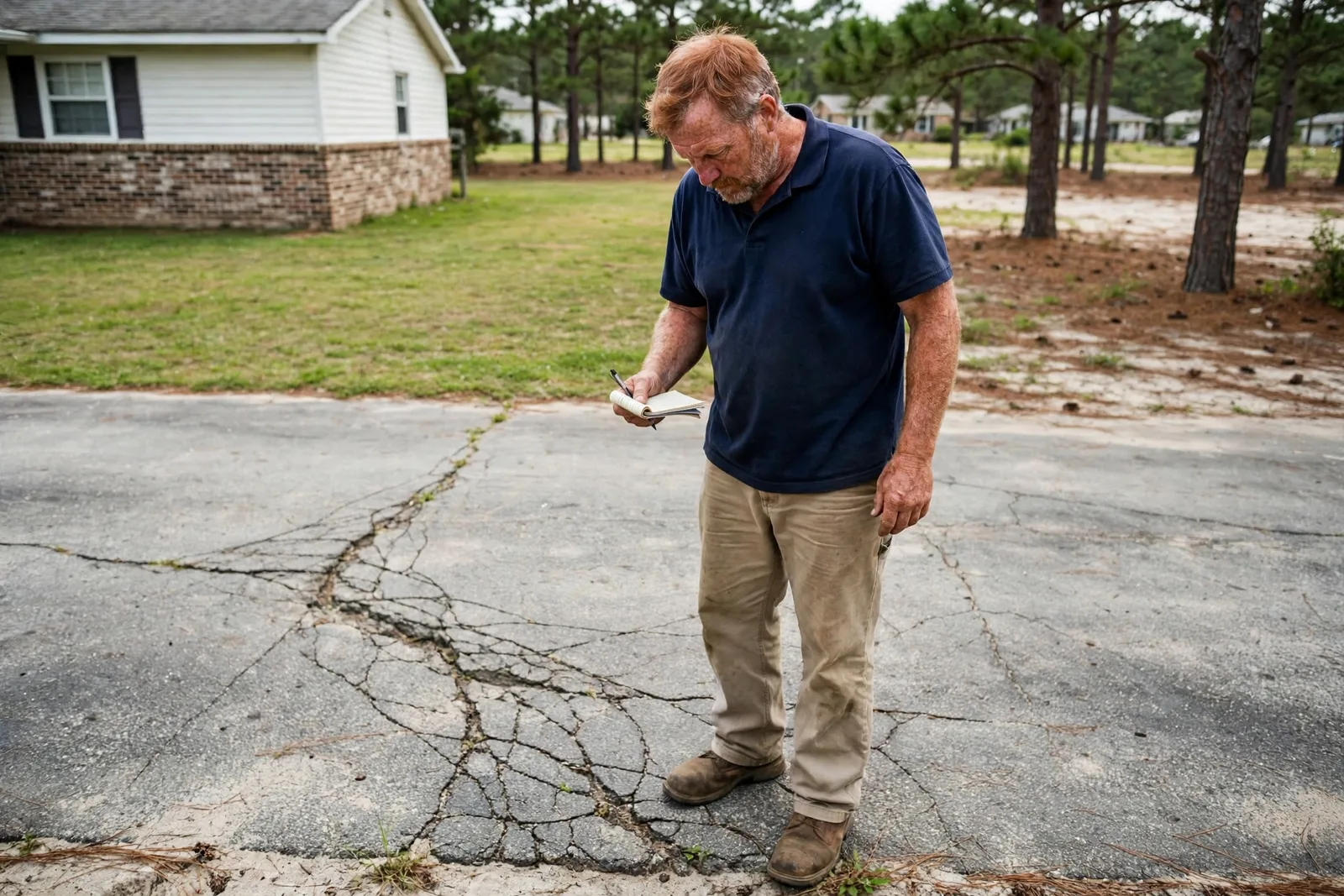
How Derek came to this work
Derek's first pavement job was a summer job as a teenager, on a sealcoat crew. He started where most people start, hauling, taping off edges and staying out of the way of the people who knew what they were doing. Then he got a squeegee in his hands, and later the spray wand.
He spent years on both. The squeegee teaches you how sealer lays down, and how it looks when it is too thin or too thick. The wand teaches you pace, and how much one wrong pass shows once the coat dries. You do not learn those things from a brochure. You learn them by getting sealer on your boots in July.
Now he runs the work instead of carrying it. He still reads a lot the way a man who has worked on plenty of them reads it. He looks at the edges first, because that is where water gets in. Then he looks at where cars sit and drip.
What he believes about pavement
Derek will tell you that most pavement does not fail from age. It fails from neglect. An asphalt surface is a maintained surface, not a permanent one, and four things work on it constantly on this coast.
- Sun and heat oxidize the surface until it turns gray and brittle.
- Water finds its way through open cracks, and our summer storms leave a lot of it standing.
- Oil and fuel drippings soften the asphalt under parked cars.
- The sandy soil under Brunswick County lets a base go soft once water gets under the surface.
Sealcoating works against the sun and the oil. Crack sealing keeps the water out. Patching deals with a base that has already given up in one spot. Taken early and in order, that care costs far less than tearing out a drive or a lot and starting over. Most owners reseal every two to three years, and that is typical practice, not a promise about any one surface. What Derek can promise is that he will tell you what the pavement actually needs and leave off what it does not.
What we do, and what we don't
This is pavement care. We seal, fill, patch, stripe and mark existing asphalt for homes, businesses, HOAs and churches. We add signs and wheel stops where a lot needs them, and we set up maintenance programs for owners who want the whole lot looked after on a schedule.
We do not lay new lots or roads. We do not mill, pour concrete or do drainage work. We do not bid municipal road work. If your job is one of those, we will tell you on the first call rather than waste your time.
How a job runs
Every job follows the same order, and Derek is in each step of it.
1. One call
You call (910) 370-1121 and tell us what you have: a driveway, a church lot, a row of faded bays. We ask where it is and what has you worried. That is all the first call is.
2. The walked site
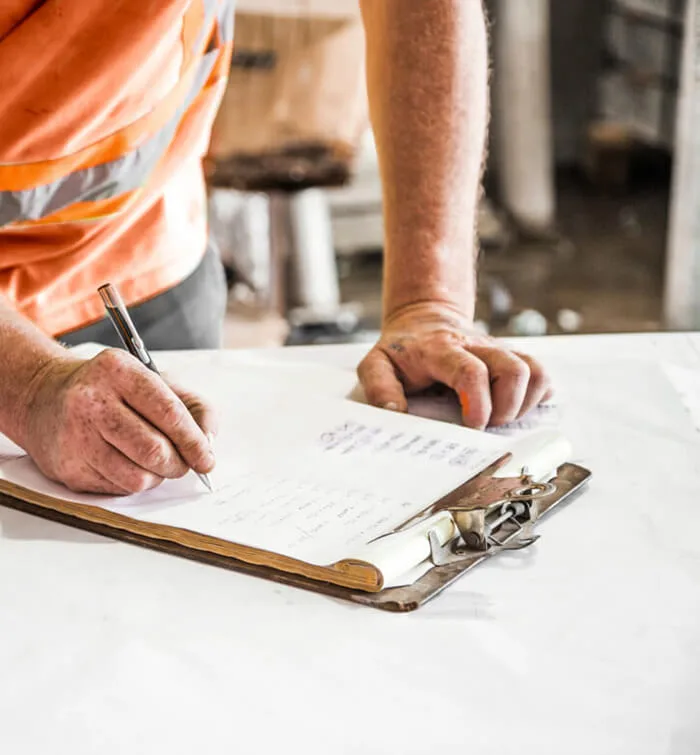
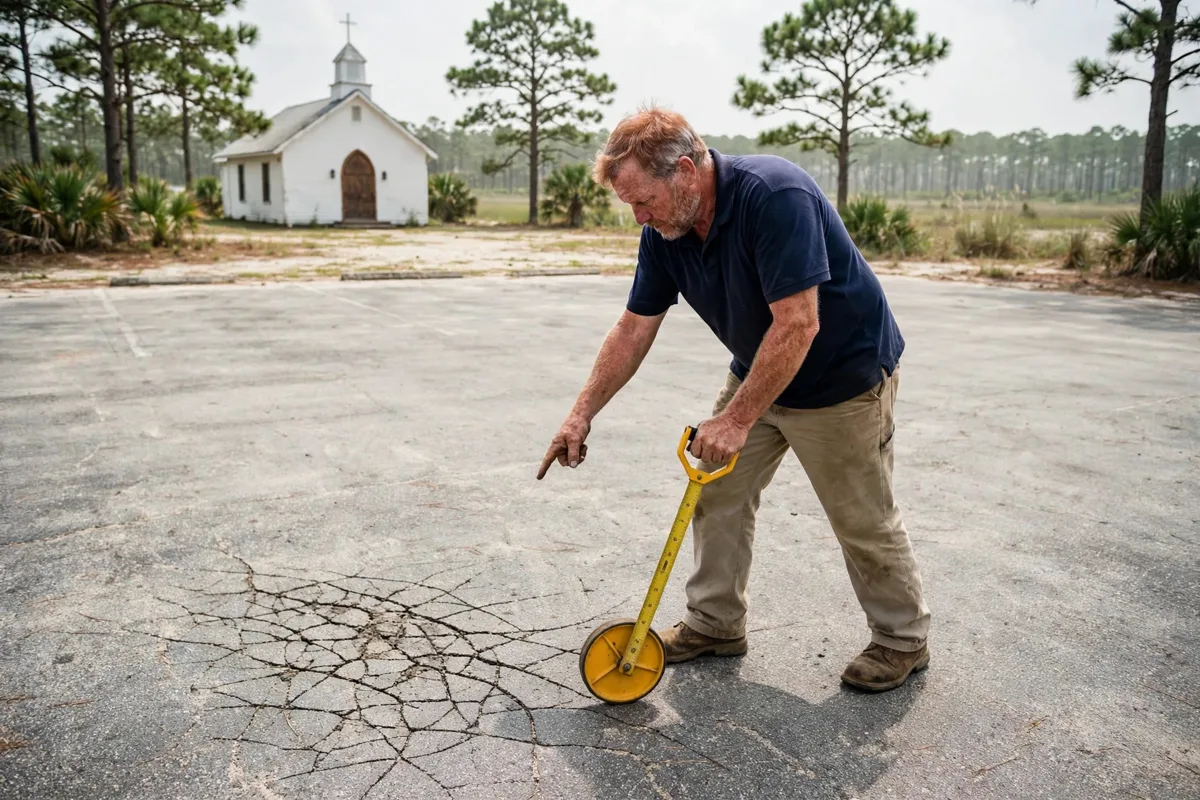
Derek walks every lot before it is quoted. He measures the area, looks at the cracks, checks the edges, finds the oil spots and presses on the soft ones. He is also checking whether sealcoating is the right answer at all. Sometimes the answer is crack work first, a patch, or both.
3. A written price
You get the price in writing, with the work listed in the order it will be done. Size, condition and prep set the number. Heavy cracking or a lot of oil staining adds to it, and a clean, sound surface does not. You can see what is in the price and what is not before anyone brings out a machine.
4. The route board and the weather window
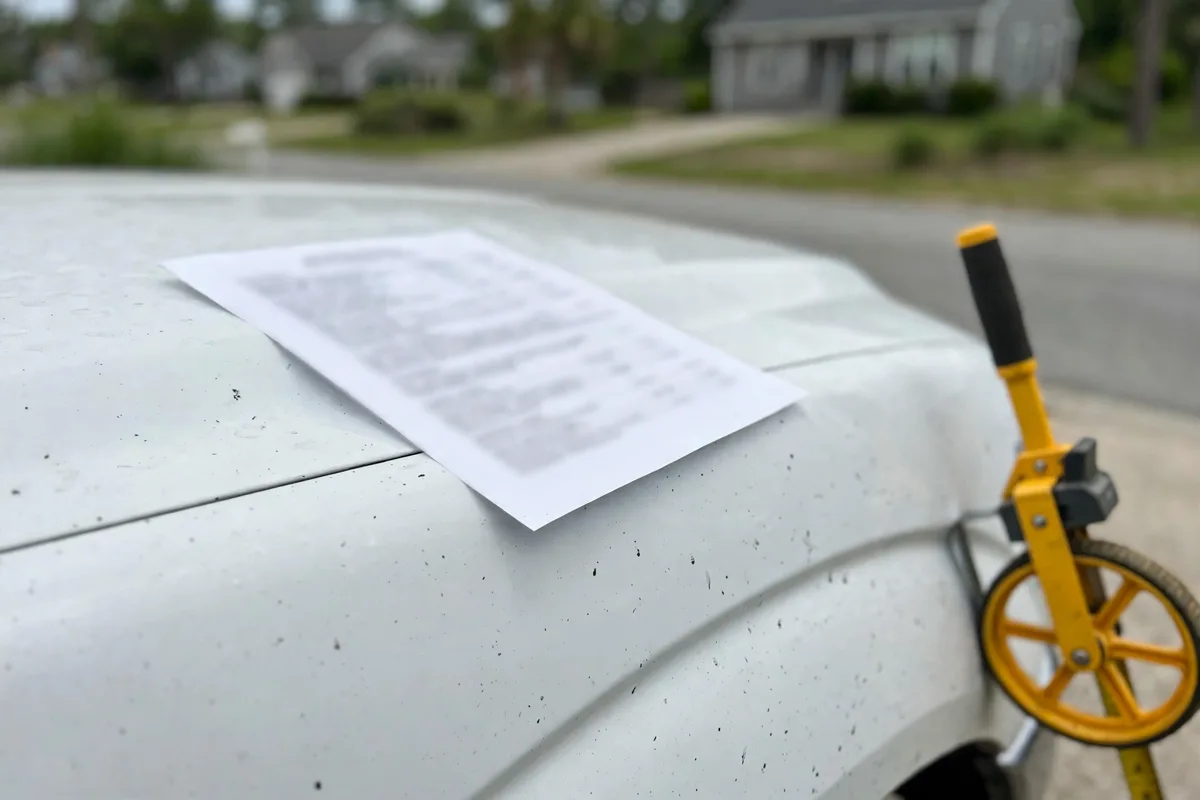
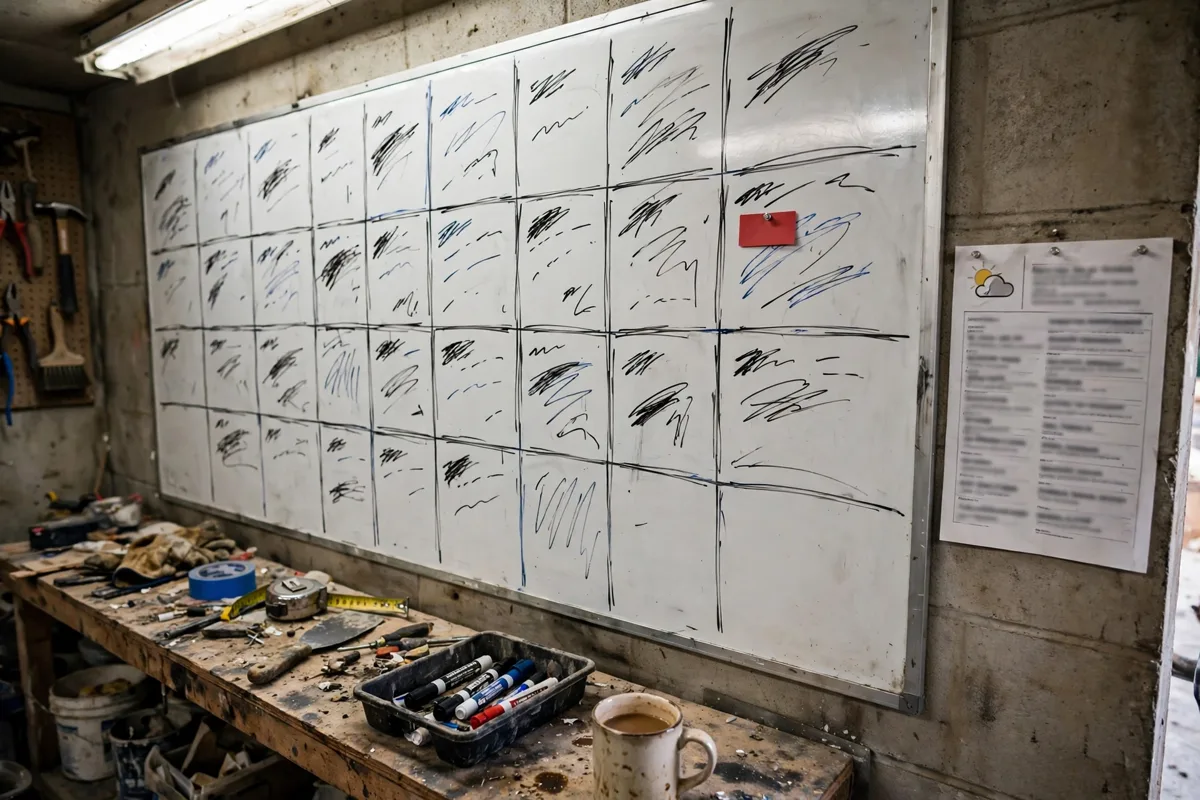
Derek runs the route board, which is where every job is placed by day and by order. Before a sealcoat day he checks the weather window: the pavement has to be dry going in, and the sealer needs time to cure without rain on it. In a county that gets afternoon thunderstorms and the occasional tropical system, that check matters.
When a job has to move for rain, Derek is the one who calls you. You hear it from him, with the new day, and you do not find out from an empty driveway.
5. The work, in the order promised
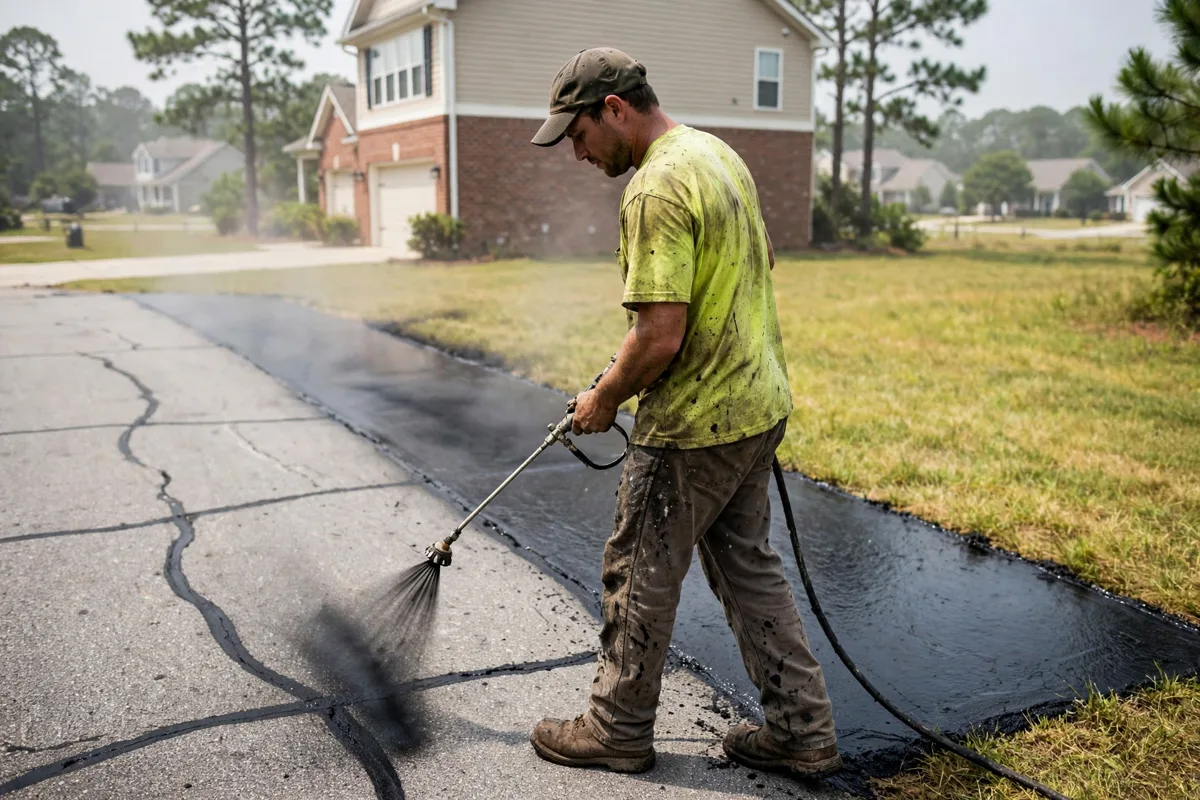
Prep comes first: the surface is cleaned, the cracks are filled, the bad spots are patched and the oil stains are primed. Then the sealer goes on. On a lot, striping comes last, once the surface is ready to take paint. Repairs before coating, coating before paint. That order is not a style choice, because each step needs the one before it done right.
6. The final walk
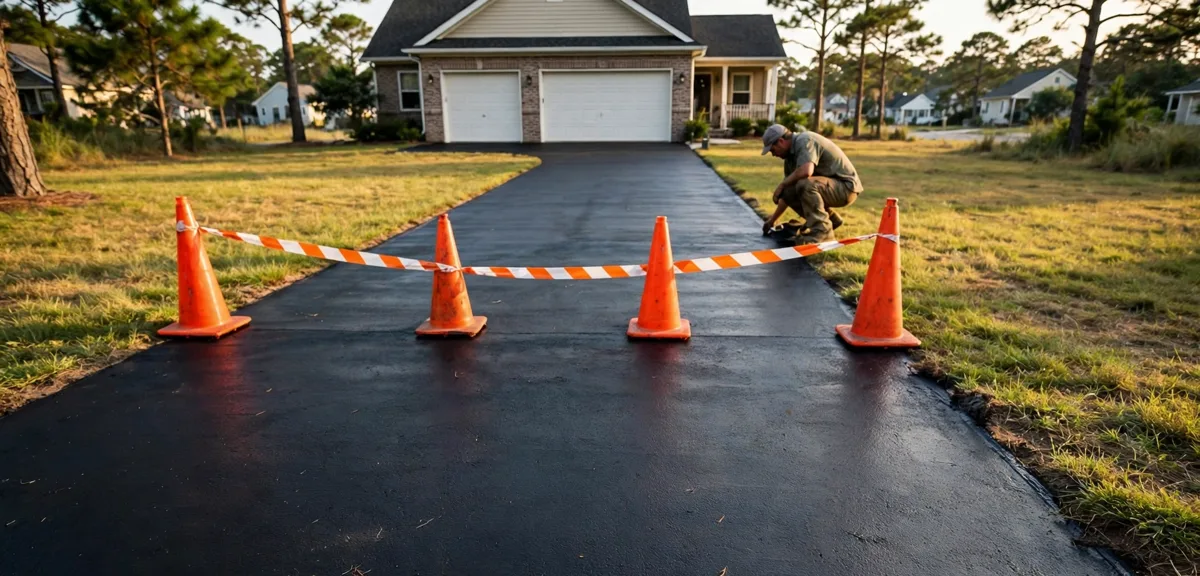
When the work is done, Derek walks it again, looking for missed edges, thin spots and anything that does not match the written price sheet. Fresh sealcoat has to stay closed to traffic while it cures, so cones and tape go up and you are told when the drive or lot can be used again.
The ground we cover
Leland is the center. From here the crew works the road-connected parts of Brunswick County, and Wilmington is served across the river. Some of the work sits farther out, near Sunset Beach, Calabash and Carolina Shores. We do not serve Bald Head Island.
Leland is one of the fastest-growing towns in North Carolina, and much of its housing is from the master-planned communities built since the 2000s. Driveways and community lots from that wave are reaching maintenance age together, so the HOA amenity lots, church lots and retail lots along US-17 and Village Road all need the same steady care. That is the work we are here for.
Have Derek walk your pavement
If you have a driveway going gray, cracks opening up along a lot, or paint that has faded to nothing, call or send the form. Derek will be the person who walks your pavement, measures it, tells you what it needs and puts the price in writing.
The more details you give, the better we are able to help you.