Leland Pavement Care does line striping for lots in Leland and across Brunswick County that have faded to the point where drivers guess. Stalls blur, arrows disappear, the accessible symbol is a ghost of itself, and people park crooked because nothing tells them not to. Repainting the lines puts the lot back in order, and it costs far less than most owners expect.
Striping is the last step in caring for a lot, not the first. Cracks get filled with crack sealing, the surface gets coated with parking lot sealcoating, the coat cures, and only then do the lines go down. Paint applied ahead of that order gets covered or ruined, so we plan the sequence before we plan the paint.
Most of what we mark falls under pavement markings: stalls, accessible spaces and aisles, crosswalks, stop bars, arrows, fire lanes. Some lots also need parking signs or wheel stops, and we set those as an add-on to the striping, not as a job of their own. All of it belongs to ordinary parking lot maintenance, the kind that keeps a lot safe to drive and easy to read.
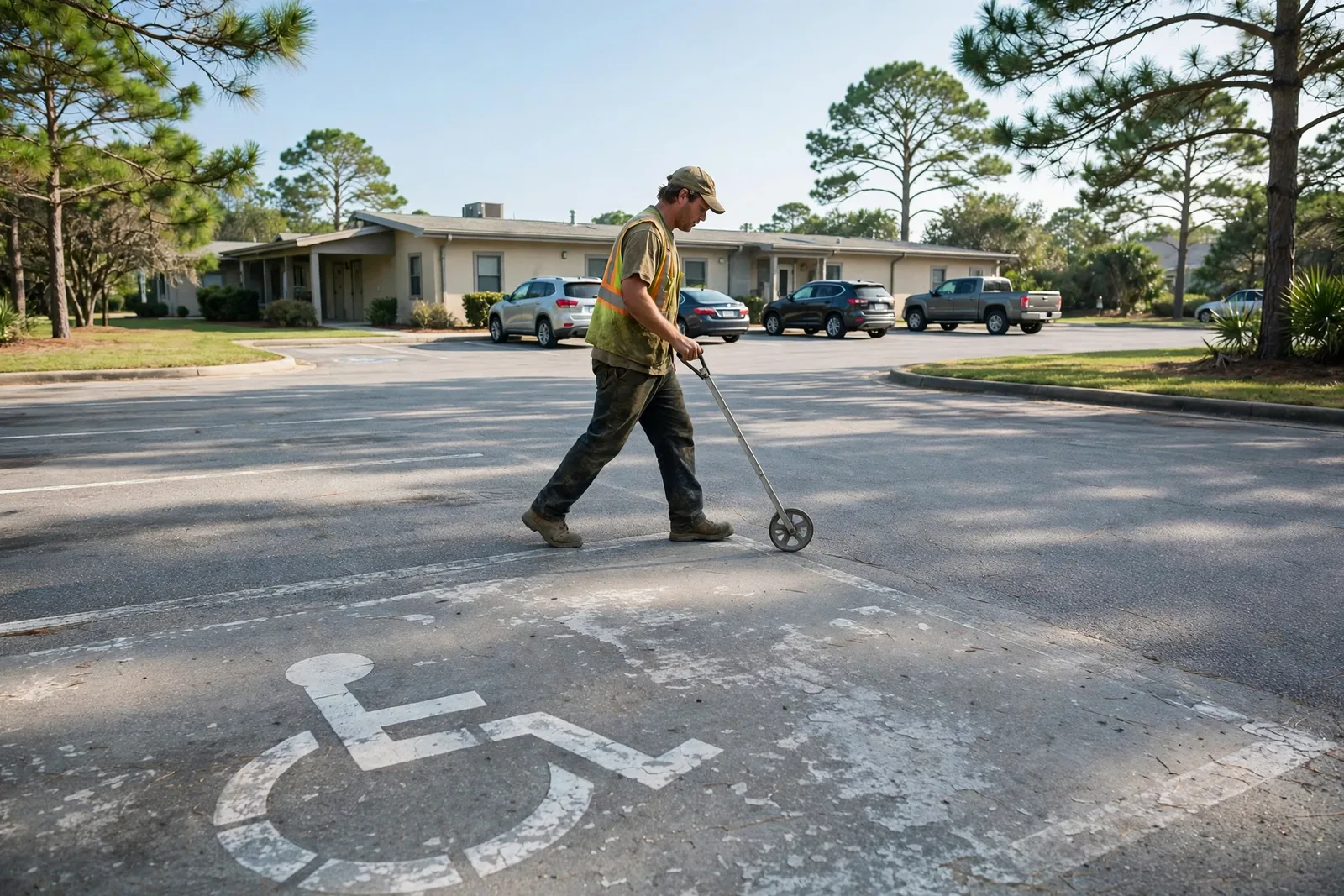
Restripe over the existing layout, or start with a new one
A restripe follows the lines that are already there. The crew finds the old stalls, aisles and markings, matches them, and repaints on top. It is the right job when the lot still works the way the owner uses it and the paint has simply worn out.
A new layout is a different job. If the lot's use has changed, we rethink the layout before we pick up a paint machine. That means looking at how many stalls the lot needs, how cars move through it, where accessible spaces and their aisles belong, and where fire lanes have to stay clear. Painting a bad layout fresh only makes it last longer.
A restripe is priced by the stall and the markings list. A new layout is priced by the design work plus the stalls.
Restripe or relayout?
Your stalls, aisles and flow still suit how the lot is used. Restripe over the existing layout. The crew locates the old lines, follows them and repaints on top. A restripe is priced by the stall and the markings list. Striping jobs run $600 to $3,600.
A new tenant changes who parks, for how long and how many. Rethink the layout first: stall count, traffic flow, accessible spaces and fire lanes. Then stripe. A new layout is priced by the design work plus the stalls. Striping jobs run $600 to $3,600.
Adding accessible spaces moves other stalls, so it is a layout question before it is a paint question. Spaces, access aisles and symbols are placed on the new plan, then marked. We do the markings work. The counts and dimensions your property needs are set by the rules that apply to it, and we do not certify compliance.
Stripe after the sealcoat has cured, never before a coat. Crack sealing comes first, then the sealcoat, then cure time, then the lines. If the layout is changing too, the new lines are laid out on the cured surface.

Waterborne paint and thermoplastic
Waterborne traffic paint is the standard for lot striping, and it is what most of our work uses. It goes down fast, covers well on sound asphalt, and suits stalls, aisles and most of the markings on a lot.
Thermoplastic is the long-wear option. It is a heavier material, built up on the surface, and it earns its place on markings that take the most tires: crosswalks, stop bars, arrows at a busy entrance. It costs more than paint and it is priced on the markings list, so we normally use it on the high-traffic markings and leave the rest in paint. Wear depends on traffic and weather, and we do not promise how long either material will last.
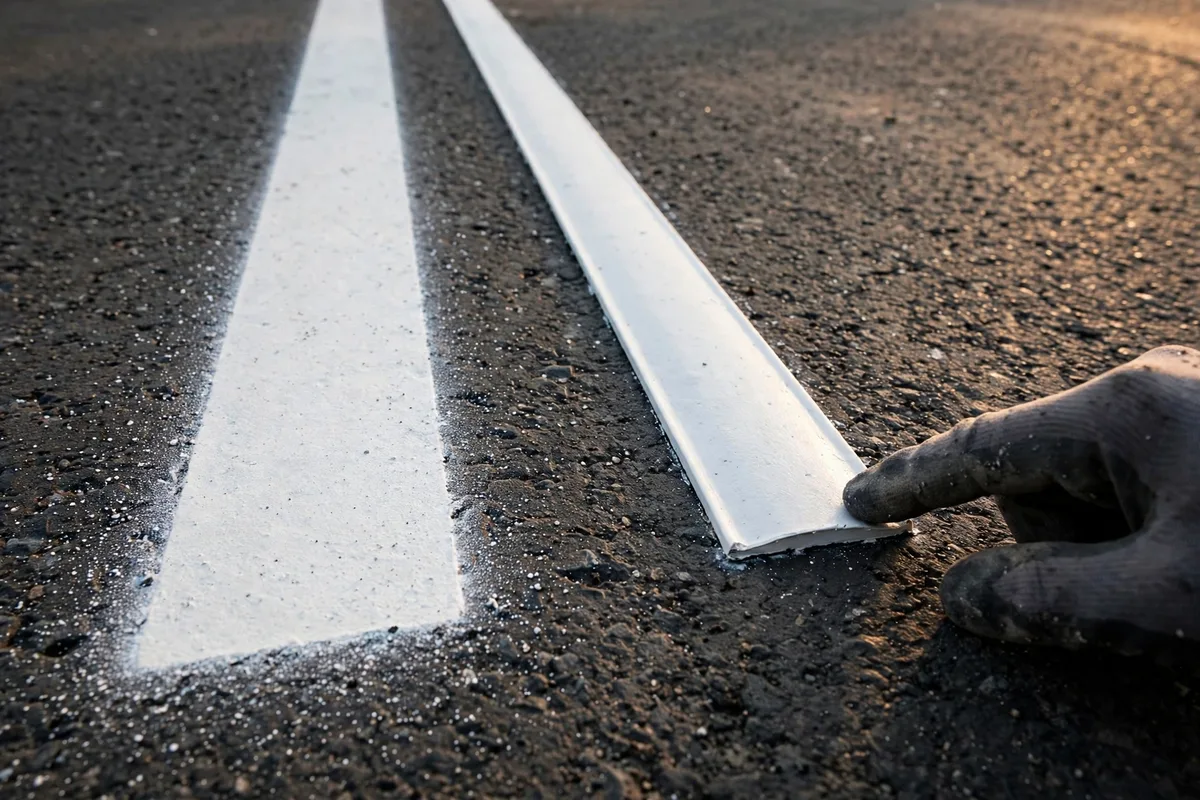
Where striping falls in the job
If your lot needs more than lines, the order matters. Crack sealing comes first, because open cracks let rain into a sandy base and no coating fixes that. Patching comes next for any broken spots. Then the sealcoat goes on. The sealcoat has to cure all the way before we stripe, and we never stripe before a coat, because new sealer over fresh paint hides the lines or leaves them stained.
Some owners want the sealcoat done first for the cleanest finish and the lines last for the sharpest look. That is the right order. It also means one lot can be coated and striped in a short run of visits, with the lines going on only when the surface is ready for them.
If the lot has no sealcoat planned, striping stands on its own. We still look for cracks and loose spots first, because paint over a failing patch comes up with the patch.
How a striping job goes
1. Walk the lot and read the layout
We walk the whole surface, the entrances, the accessible stalls, the drop-off lanes and the fire lane. We note which lines are faded, which are gone and which markings are missing entirely. Then we sort the job into a restripe or a new layout.
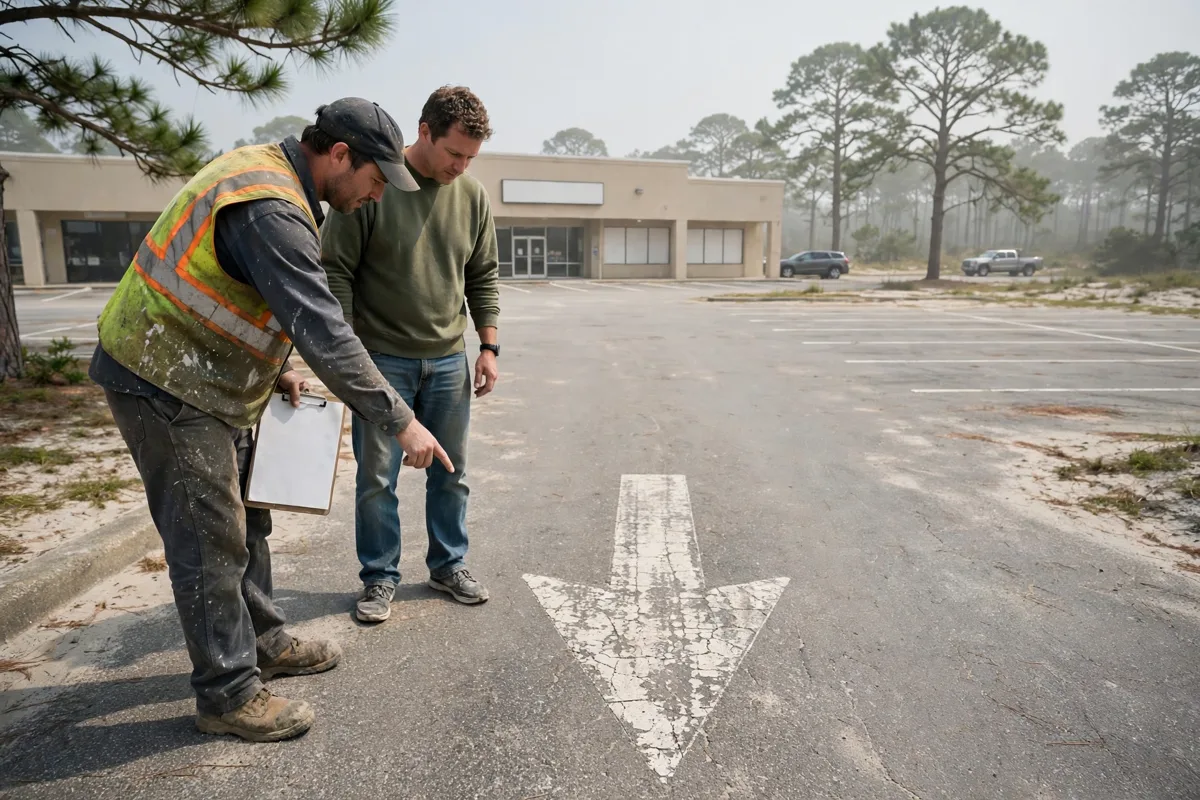
2. Measure and record what is already there
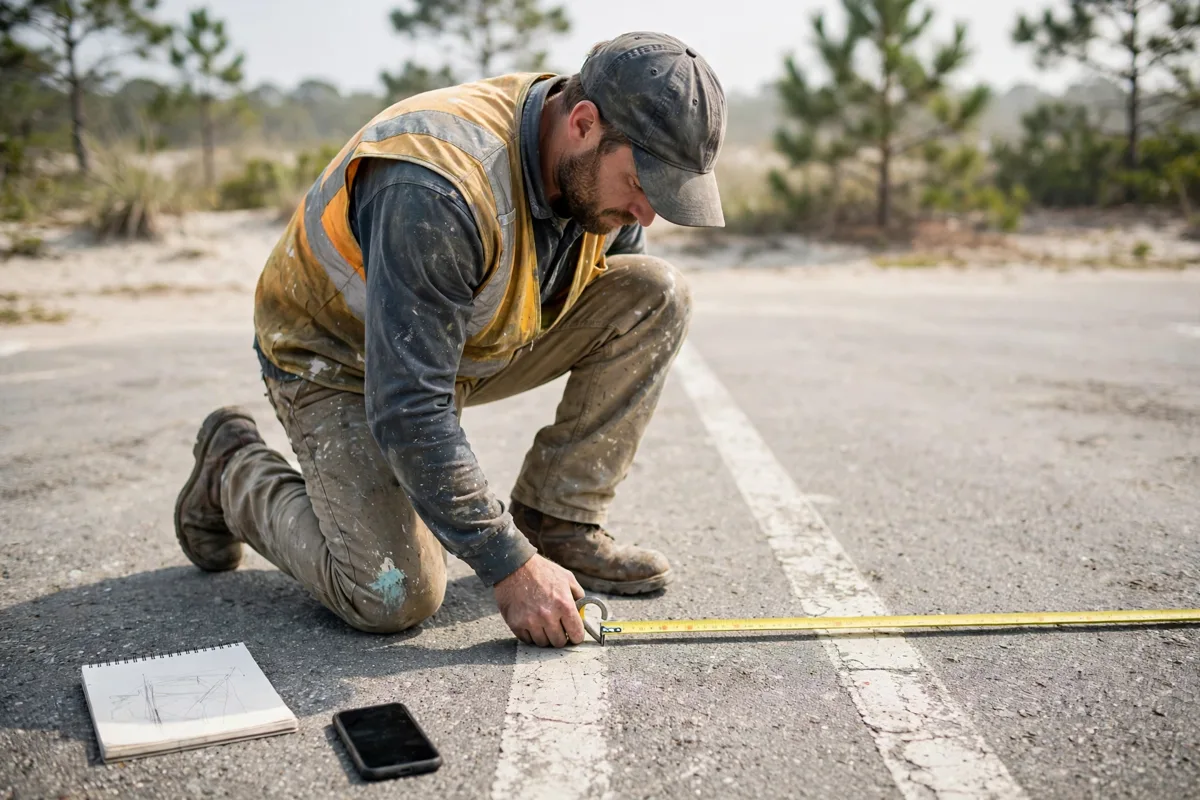
For a restripe, the crew measures stall widths and lengths, aisle widths and the position of every existing marking. The old layout is photographed and marked on a sketch. Anything that does not match what you want gets flagged before the paint comes out.
3. Clean the surface and fix what is loose
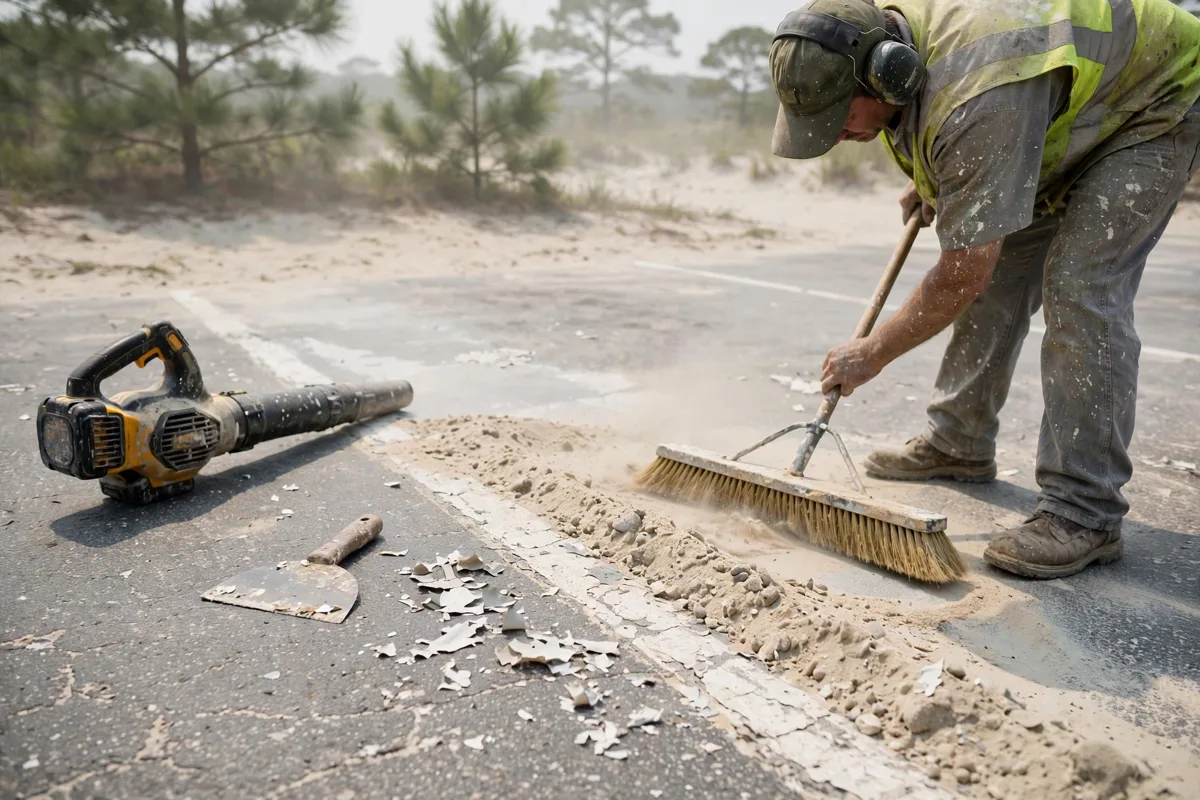
We sweep and blow off sand, leaves and debris. Peeling old paint gets scraped. Oil spots are flagged, because paint will not hold on a slick patch. Loose or broken pavement gets pointed out before striping, not painted over.
4. Set the layout points and traffic control
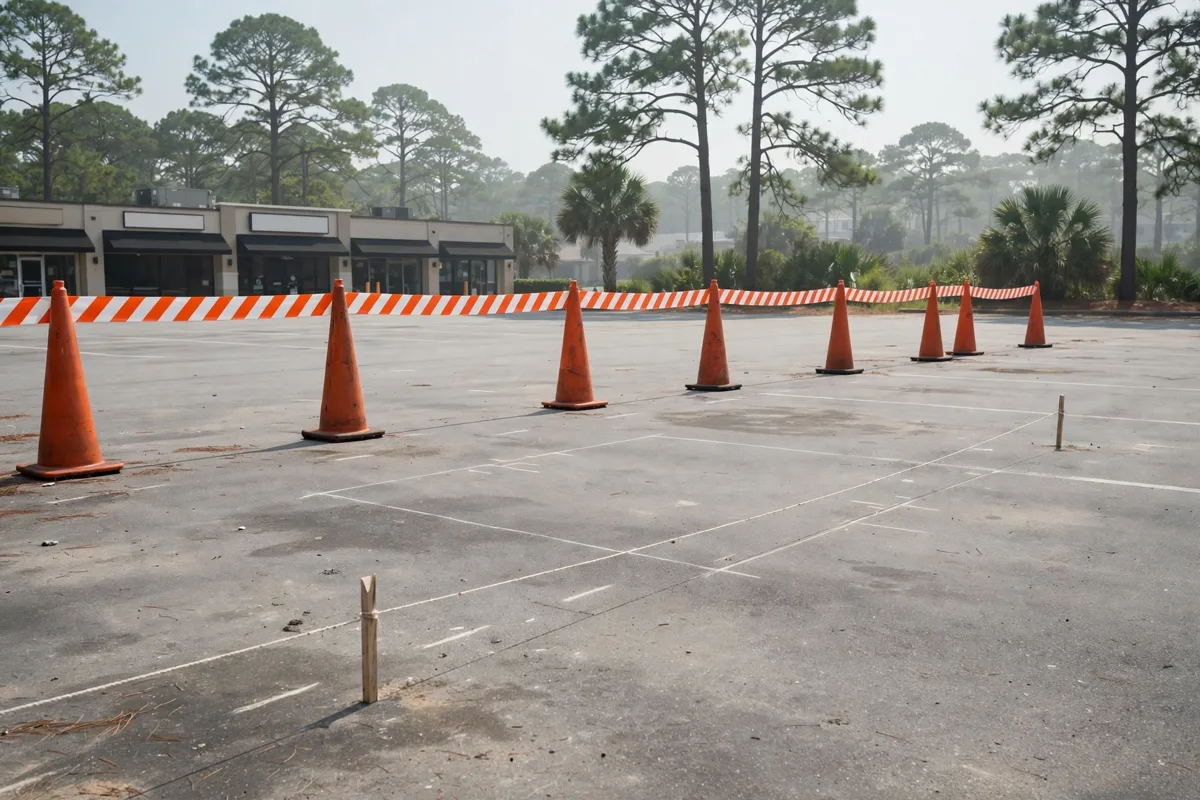
Cones and tape go up to close the area being worked. For a restripe, the crew marks small reference points along the old lines. For a new layout, the lines are laid out from the approved plan with chalk and string, so every stall is square before any paint touches the surface.
5. Stripe the priority markings first, then the stalls
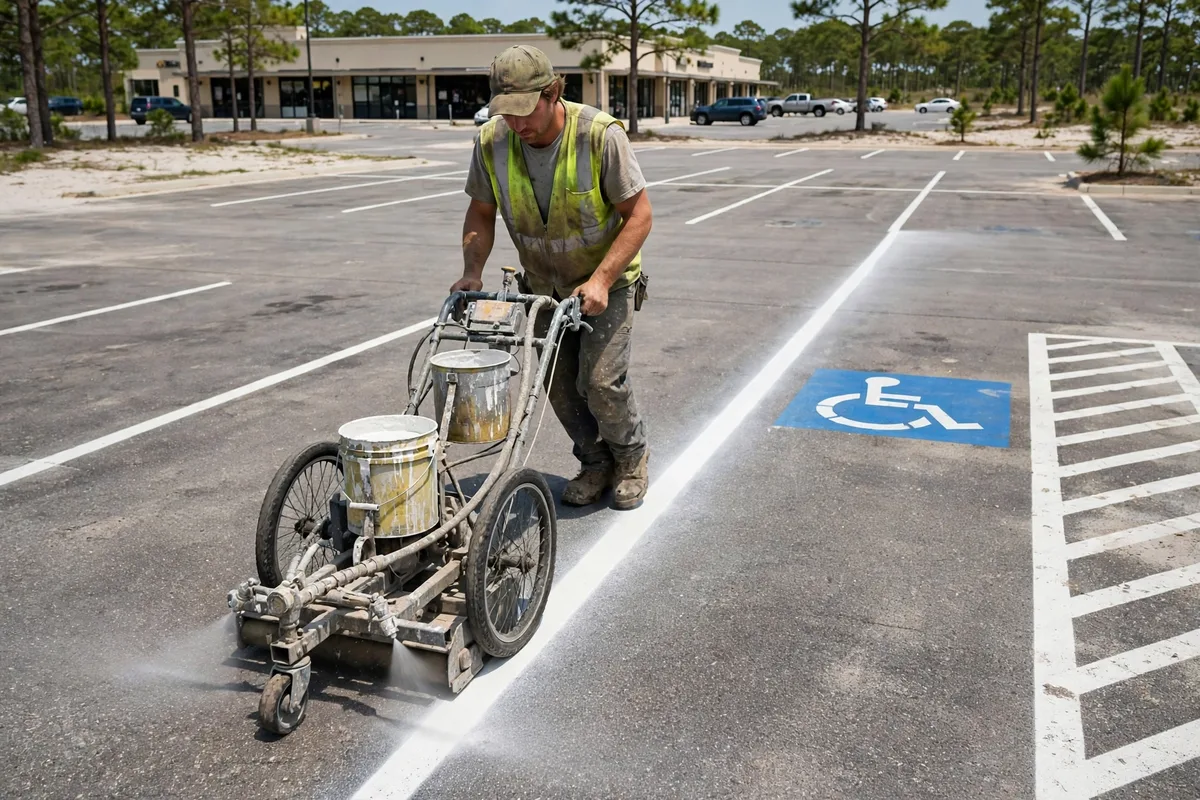
Accessible spaces, access aisles, fire lanes and the drop-off area go down first, while the surface is clean and the light is good. Standard stalls, arrows and crosswalks follow. Thermoplastic, where the job calls for it, is applied to the high-traffic markings.
6. Walk it back and release the lot
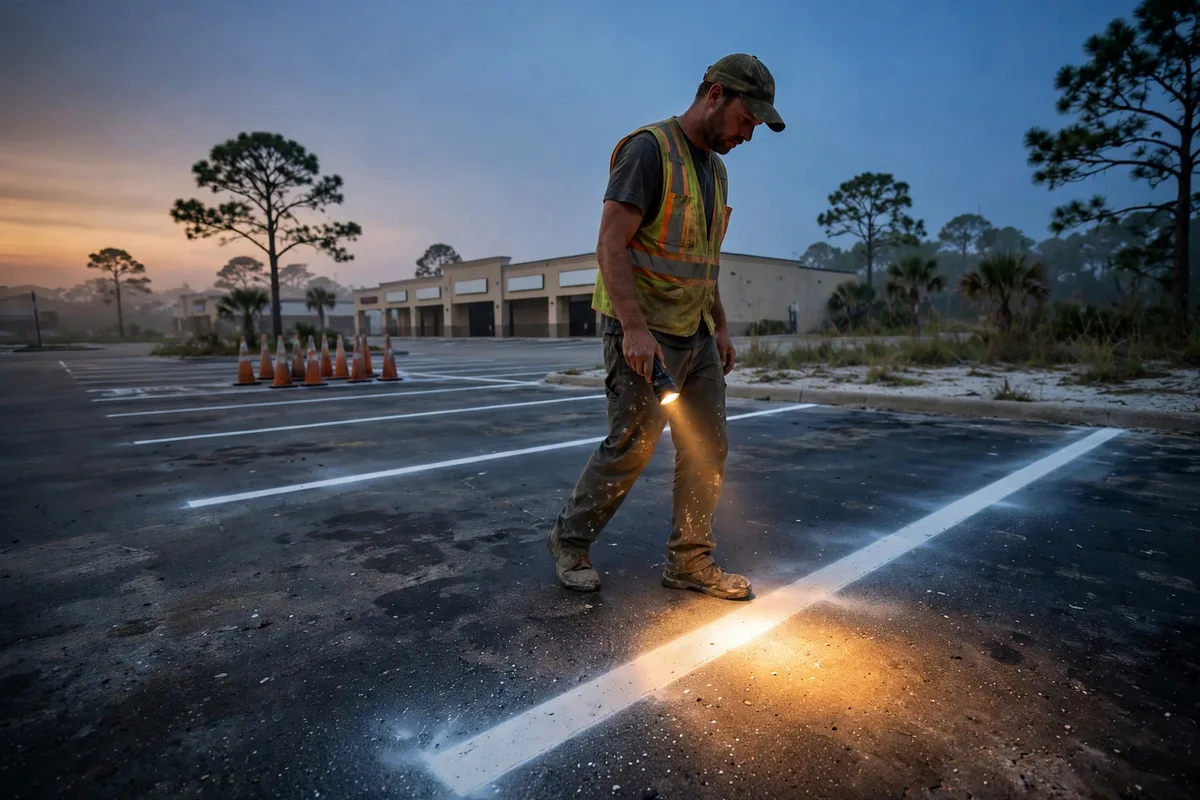
Before the cones come up we walk every line, check edges and corners, and touch up skips. Cones stay until the paint is dry enough for tires. Then we tell you which sections are open and which are not.
How long before cars come back
Waterborne paint dries quickly, but not instantly. The crew keeps cones on fresh lines until they are dry enough that tires will not pick them up, and we tell you on site which rows are open. Thermoplastic sets on its own schedule, and we cover that when it is on the markings list. We do not make you guess, and we do not release a lot until we have checked it ourselves.
Many lots are striped in a single visit. When the building is open during the day, we often close the lot in sections so the business keeps running.
What striping costs
Striping jobs run $600 to $3,600. Where a job lands in that band depends on a short list of things:
- the number of stalls
- the markings list: accessible symbols and aisles, arrows, crosswalks, stop bars, fire lane marking
- the condition of the old lines, and how much has to be scraped or cleaned
- restripe over the existing layout, or a new layout
- waterborne paint, or thermoplastic on the high-traffic markings
- any signs or wheel stops added to the job
A restripe is priced by the stall and the markings list. A new layout is priced by the design work plus the stalls, since the thinking comes first. Tell us the stall count and what is on the lot and we can place your job in the band. If the lot is also being coated, we plan the striping into the same schedule.
A medical office lot near Village Road
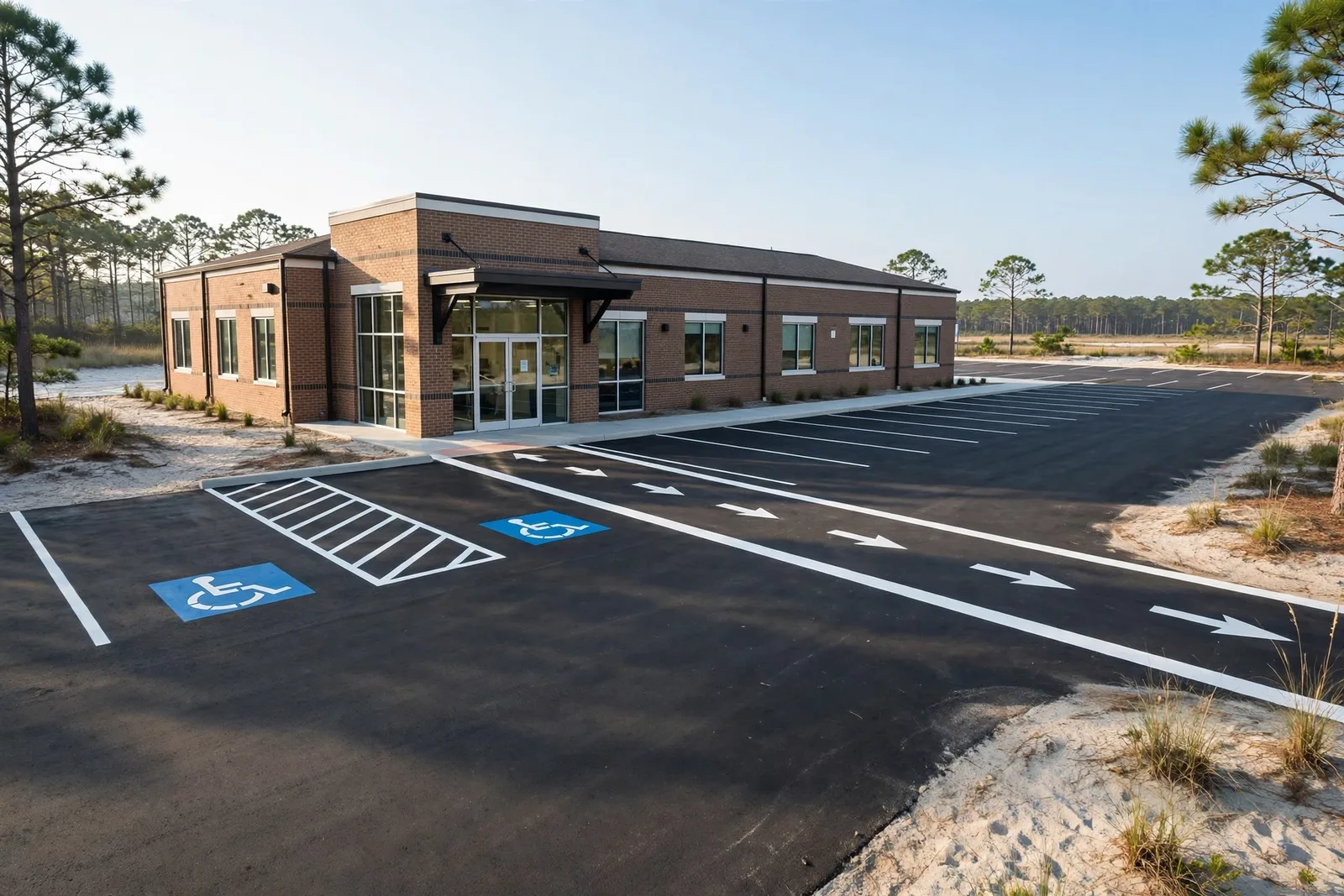
A medical office on a side lot near Village Road had lines that had gone soft with sun and traffic. Stalls were uneven, the accessible spaces were worn almost to nothing, and the patient drop-off lane had lost its arrows and edge markings. Patients were stopping wherever there was room. The layout itself still worked, so the job was a restripe over the existing layout, not a new plan.
The crew came in one evening, after the office had closed. They walked the lot and measured the old stalls, then swept off the grit and scraped the peeling edges. Cones closed the lot in sections. The accessible stalls, their aisles and the patient drop-off were re-marked first, before anything else. The standard stalls and arrows went down after that, matching the old layout line for line, and the crew walked every edge before lifting the cones.
The job came in inside the $600 to $3,600 band, priced by the stall and the markings list. The office opened the next morning with every line readable. For any lot like this one, watch the accessible spaces and the drop-off first: they fade fastest, they matter most, and they are the first thing a patient notices when they are wrong.
What we do and what we do not
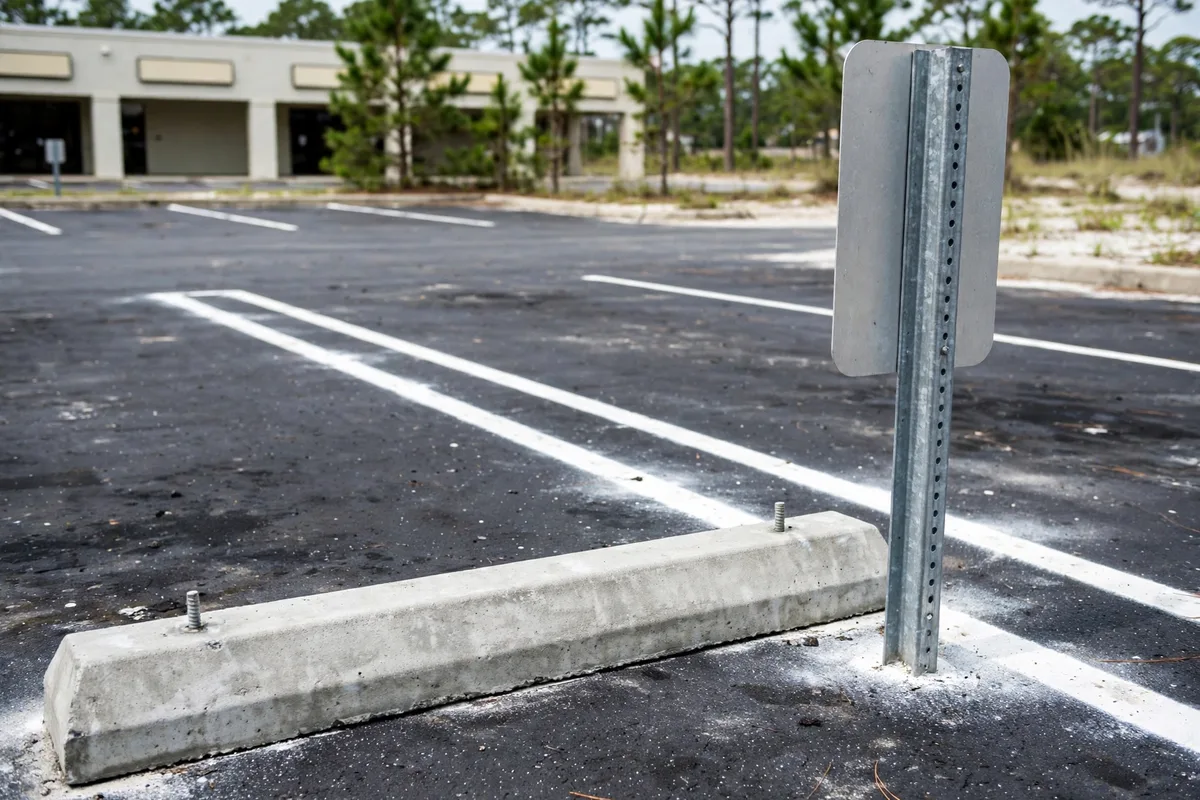
We care for existing asphalt. We do not lay new lots, mill, pour concrete or do drainage work. If a lot has failed patches or open cracks, we say so before we paint, and we fix them first, because striping over damage wastes your money. Signs and wheel stops are an add-on to a striping job, set after the lines are done and cured.
We serve Leland and the road-connected parts of Brunswick County, and we go across the river to Wilmington when the job calls for it.
Questions
How much does parking lot line striping cost?
Striping jobs run $600 to $3,600. The number of stalls, the markings list, the condition of the old lines, the paint type, and whether the job is a restripe or a new layout set where yours falls. A restripe is priced by the stall and the markings list. A new layout is priced by the design work plus the stalls.
What is the difference between a restripe and a new layout?
A restripe follows the lines already on the lot and repaints them. A new layout changes the plan itself: stall count, flow, accessible spaces and fire lanes. We rethink the layout first, then stripe. A new layout is priced by the design work plus the stalls.
When does my lot need a new layout instead of a restripe?
When the way the lot is used has changed. A new tenant, more cars, a different traffic pattern or added accessible spaces are the usual reasons. If the layout still works and only the paint is gone, a restripe is the right job.
What paint do you use?
Waterborne traffic paint is our standard. It suits stalls, aisles and most markings, and it goes down quickly. Thermoplastic is the long-wear option, used on high-traffic markings like crosswalks, stop bars and entrance arrows.
Is thermoplastic worth it?
On markings that take the heaviest tire traffic, often yes, because it stands up to wear better than paint. On low-traffic stalls it is usually more than the job needs. We price it on the markings list, so you see where it goes and what it adds.
Should I stripe before or after sealcoating?
After. The sealcoat has to cure fully, and then the lines go on. We never stripe before a coat, because sealer over fresh paint hides the lines or stains them.
What comes first if my lot has cracks too?
Crack sealing comes first, then any patching, then the sealcoat, then the lines. Open cracks let water into the sandy base, and a good coat of paint will not stop that.
How long before cars can use the lot again?
Cones stay on fresh lines until they are dry enough that tires will not pick them up. We tell you on site which rows are open. Thermoplastic sets on its own schedule, and we explain it when it is part of your job.
Can you stripe in sections so my business stays open?
Yes. We close the lot in sections, work them one at a time and reopen each when it is safe. The plan is set during the walk-through.
Do you mark accessible spaces?
Yes. Accessible spaces, access aisles and symbols are part of the markings list, and on a restripe they are re-marked first. We carry out the markings work. The counts and dimensions your property needs are set by the rules that apply to it, and we do not certify compliance.
Can you add parking signs and wheel stops?
Yes, as an add-on to a striping job. They are set after the lines are done and cured. They are not a standalone service for us.
Do you do new paving or resurfacing?
No. We maintain and repair existing asphalt: sealcoating, crack sealing, patching, striping and the work around them. We do not lay new lots, mill, pour concrete or do drainage.
Do you stripe in Wilmington and the beach towns?
Leland is our center, and we serve road-connected Brunswick County, including the beach towns and Wilmington across the river. Bald Head Island is not served.
How do I get a price for my lot?
Striping jobs run $600 to $3,600. Call (910) 370-1121 or send the form with your stall count and what is painted on the lot, and we will place the job in that band.
Get your lot lines back
Call (910) 370-1121 or send the form below. Tell us the size of the lot, how many stalls it has, and whether the layout has changed. We will tell you whether it is a restripe or a new layout and where the job falls in the $600 to $3,600 band.
The more details you give, the better we are able to help you.