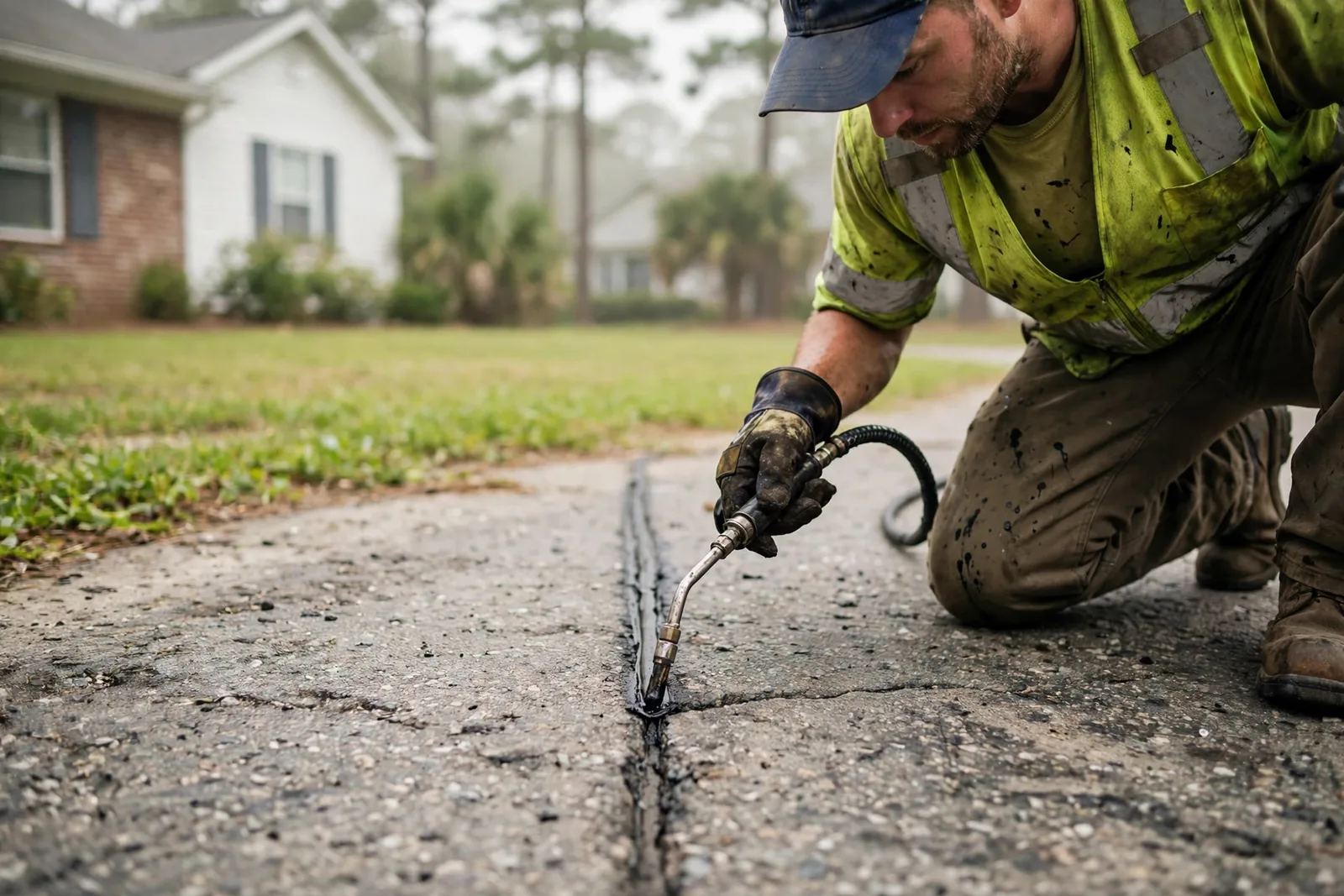
On this coast, a crack in asphalt is a pipe. A summer storm drops inches of rain in a short time, the water finds the opening, and it goes to work on the sandy base underneath until the surface settles and breaks. Leland Pavement Care does crack sealing for homes, businesses, HOAs and churches in Leland and across Brunswick County, and the job is to close that pipe while it is still a thin line and not a hole.
Done early, crack filling is the cheapest work on a pavement. It also keeps a small crack from turning into pothole repair, and it holds down how much asphalt patching a lot needs later. Sealer over open cracks only hides them for a season, which is why asphalt sealcoating goes on after the cracks are closed, never before. The order is the same for driveway sealcoating on a house and for parking lot sealcoating at a church or a shopping center, and it is where any parking lot maintenance program starts.
We work from Leland out through Brunswick County, and across the river into Wilmington when the job is there. The product is hot-pour rubberized sealant, put into cracks that have been cleaned out, and into some cracks that have been routed first.
What water does to a crack here
Asphalt is a maintained surface, not a permanent one. Four things wear it down on this coast: sun, water getting in through cracks, oil and fuel, and a failing base. Sealcoating answers the sun and the oil. Patching answers a failed base. Cracks belong to the water, and the water is the one that does the most damage in Brunswick County.
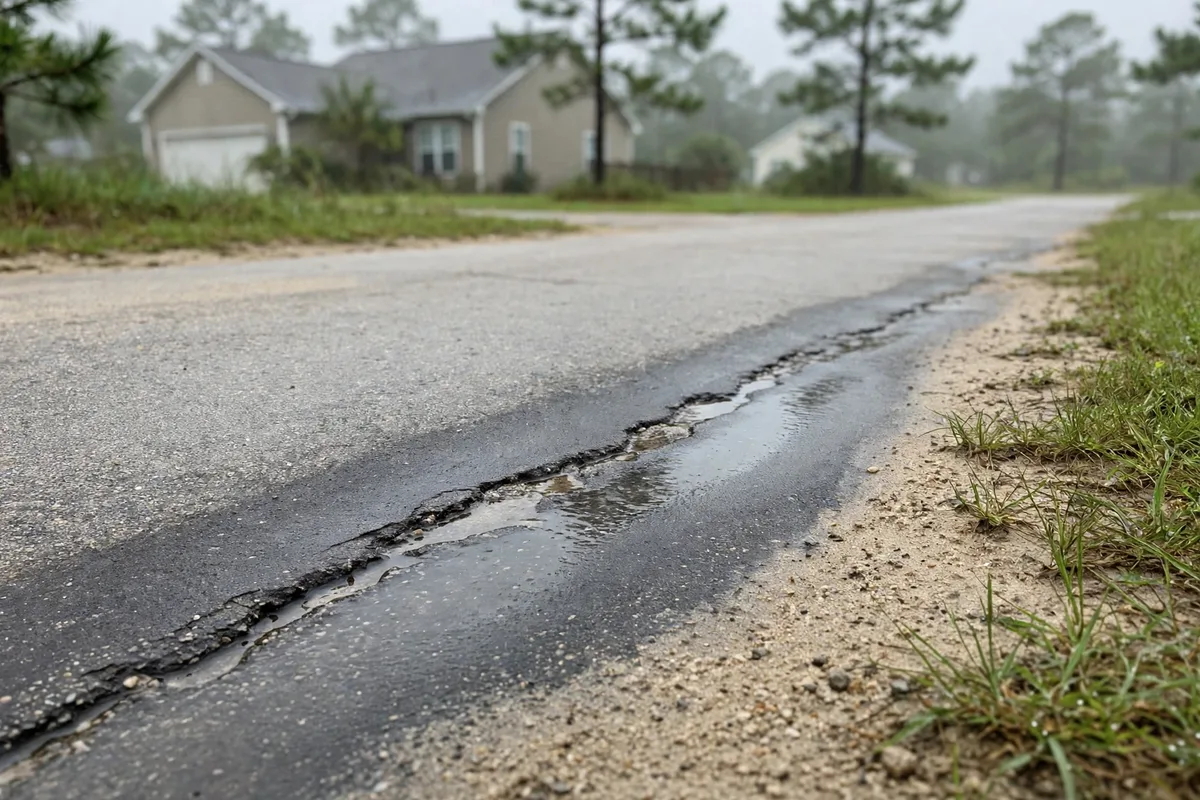
The soil here is sand, and the water table is high. A driveway or lot depends on its base, and sand does not hold a base together once water starts moving through it. Rain comes in a downpour, not a drizzle. Hurricane Florence flooded this county in 2018, and ordinary storm seasons since then have shown how fast open cracks pass water down. Water enters, softens the base, and carries fines out from under the surface. The pavement over that spot loses support, sags a little, and then the cracks widen. Traffic does the rest.
Nothing about this is dramatic at the start. A crack that is a hairline in spring can be a trench by the following fall if it is open, in the wrong spot, and getting every storm. That is why we sort cracks by what they are doing, not just how they look.
Which cracks get sealed, and which mean something else
Not every crack is a sealing job. Hairline cracks, thinner than about a quarter inch, are surface checking. Sealant does not hold well in them and they are not letting much in yet, so we watch them. Working cracks, roughly a quarter inch to an inch wide, move with heat and cold, open and close, and pass water. Those are the ones we seal. Wider than an inch, or sunken along the edges, and the problem has moved past the crack into the material around it. That gets repaired first.
Then there is alligator cracking, the pattern of small connected cracks that looks like reptile skin. Alligator cracking is not a crack problem. It is a base failure showing through the surface. Sealing it is wasted money, because the support under it is gone. The fix is patching: cut out the failed section, rebuild the base and lay hot-mix. We say so plainly on the walk, even though it means the job on that spot is not crack sealing.
Crack guide
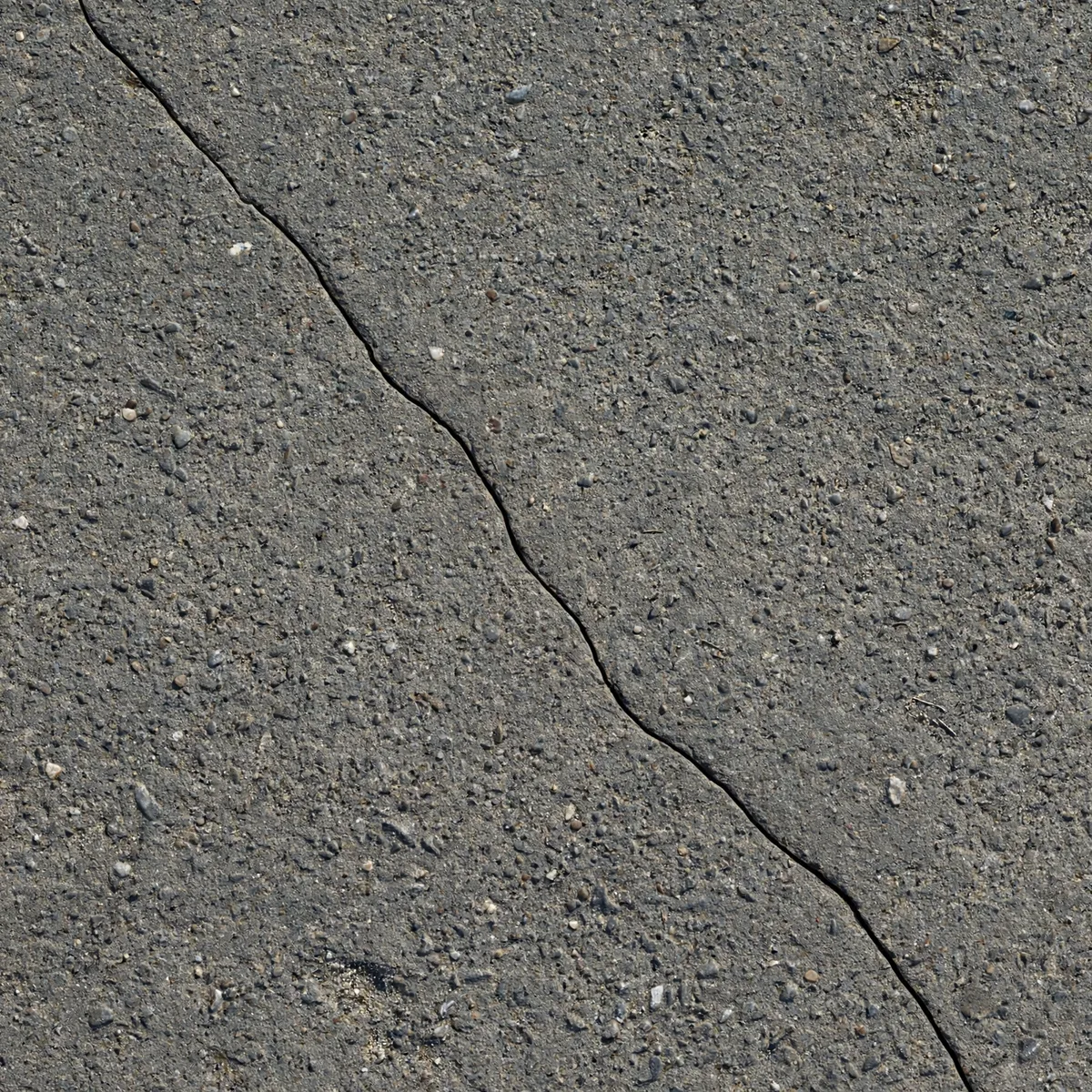
Thinner than about a quarter inch. Surface checking, not yet letting much water in. Watch it. Look again after the next heavy rain and again in a year. If it widens, it moves to the next panel.
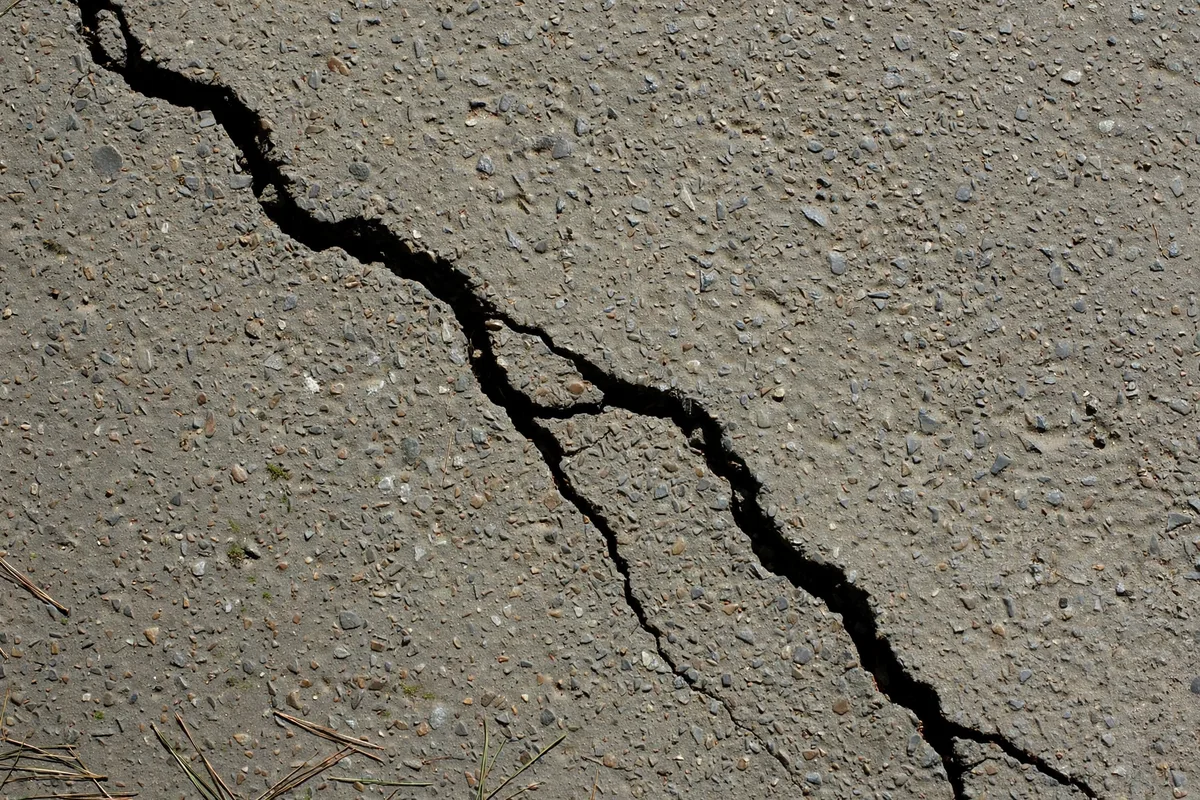
Roughly a quarter inch to an inch wide. It opens and closes with heat and cold and passes water to the base. Seal it. Hot-pour rubberized sealant, in a cleaned crack, or in a routed crack when the edges are ragged or the crack keeps moving.
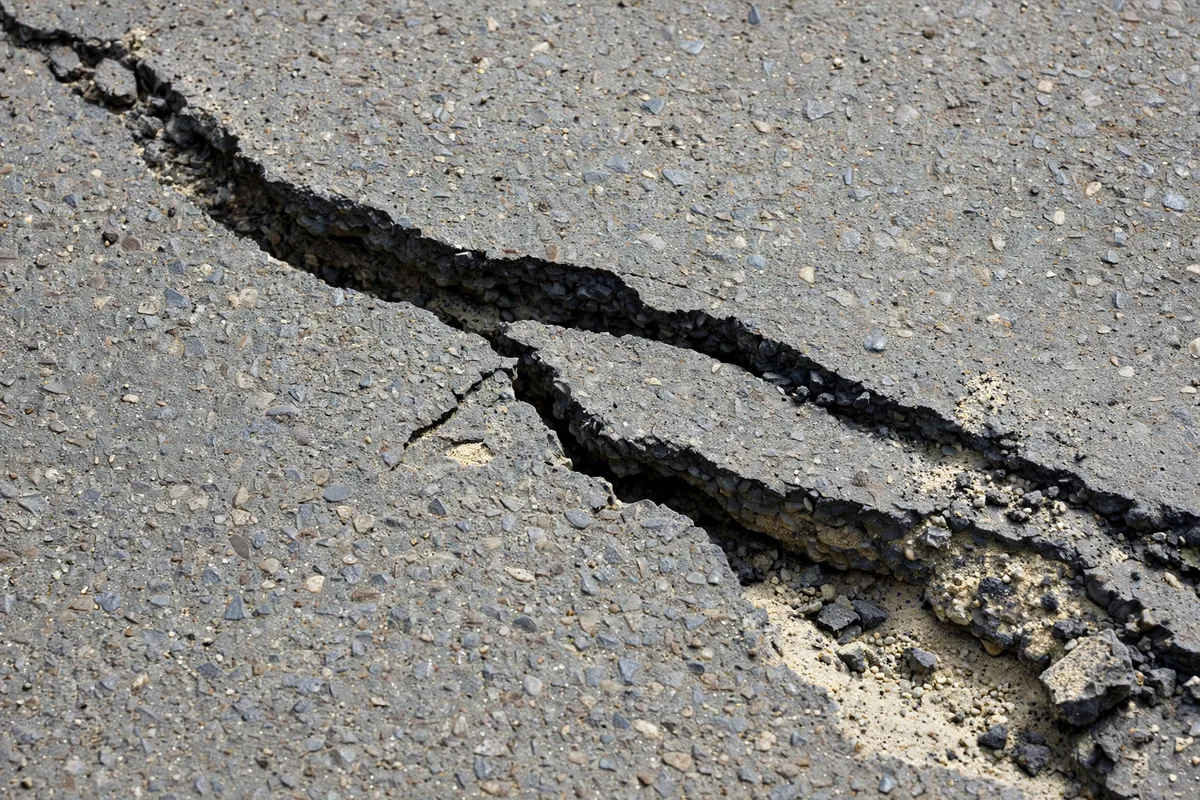
Wider than an inch, or the edges have dropped or crumbled. Sealant will not hold in this. Repair first, then seal what is left. The repair rebuilds the weak spot before any sealant goes in.
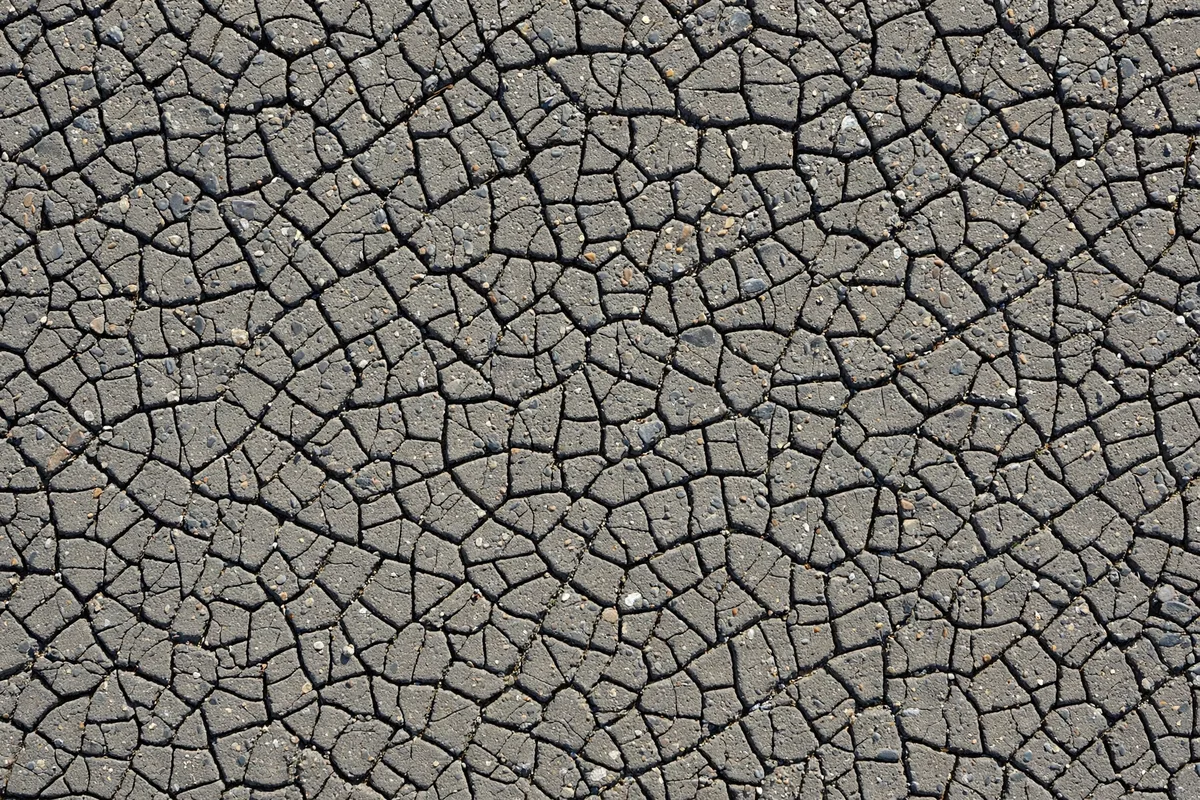
Small connected cracks in a scale pattern. This is base failure showing through the surface, not a crack to seal. Patching: cut out the failed area, rebuild the base and lay hot-mix. Sealing over it does not fix it.

Hot-pour, cold-pour and the hardware store
Hot-pour rubberized sealant is the professional standard for crack work. It goes in heated, flows into the crack, bonds to the sides and stays flexible, so it moves with the pavement through summer heat and winter cold instead of cracking along with it. That flexibility is the whole point. A crack that moves needs a sealant that moves.
Cold-pour products and the filler sold in tubes and jugs at home stores are the short-lived contrast. They are easy to put in and they cost little, and they are fine as a stopgap on a small, still crack. In a working crack they shrink, pull away from the edges and let go, often in the first season. Then the crack is open again, and now it is also dirty and a little wider. We use them rarely, and we say so when we do.
Routing, or cleaning and sealing without it
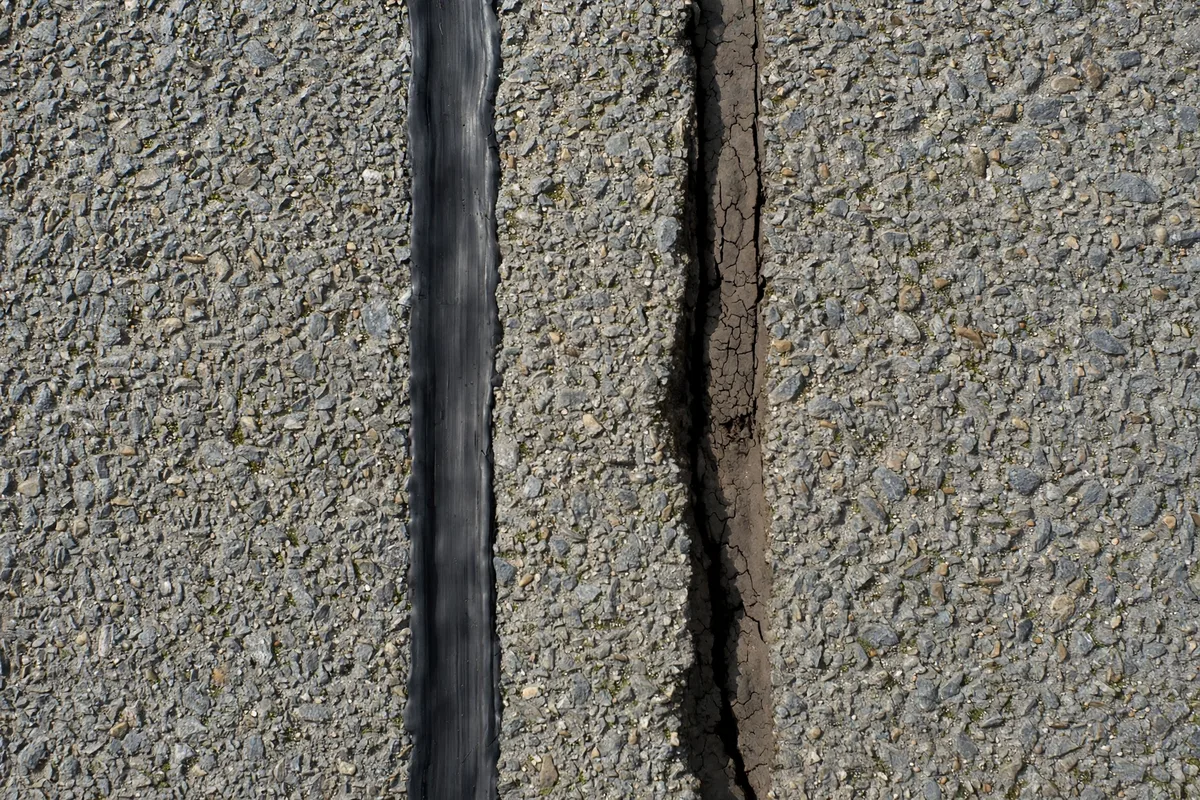
Routing means cutting the crack into a clean, squared reservoir, so the sealant has a uniform channel to sit in and walls to grip. It takes more time and costs more per foot, and it is the right call when the edges are ragged and crumbling, when the crack is wandering and uneven, or when it moves a lot. A routed crack gives sealant something solid to bond to.
Cleaning and sealing without routing is the right call when a crack is fairly straight, the edges are sound and the crack is in the working range. We clean it out thoroughly, blow it dry and fill it. On many driveways and a good share of lot cracks, that is all the crack needs. Routing every crack regardless is money spent where it does not help, and skipping routing on a bad crack is sealant that fails early. We decide crack by crack on the walk, not by a rule for the whole job.
How the work goes
Here is the job in the order it happens.
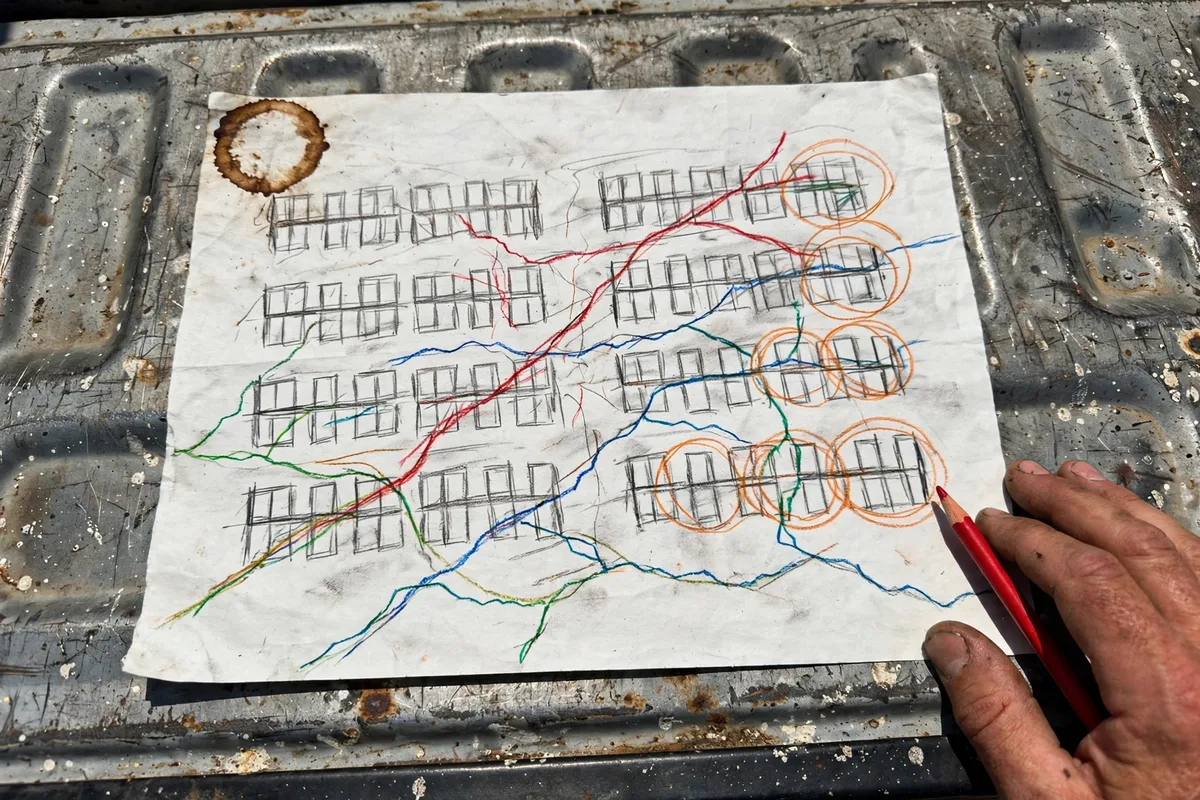
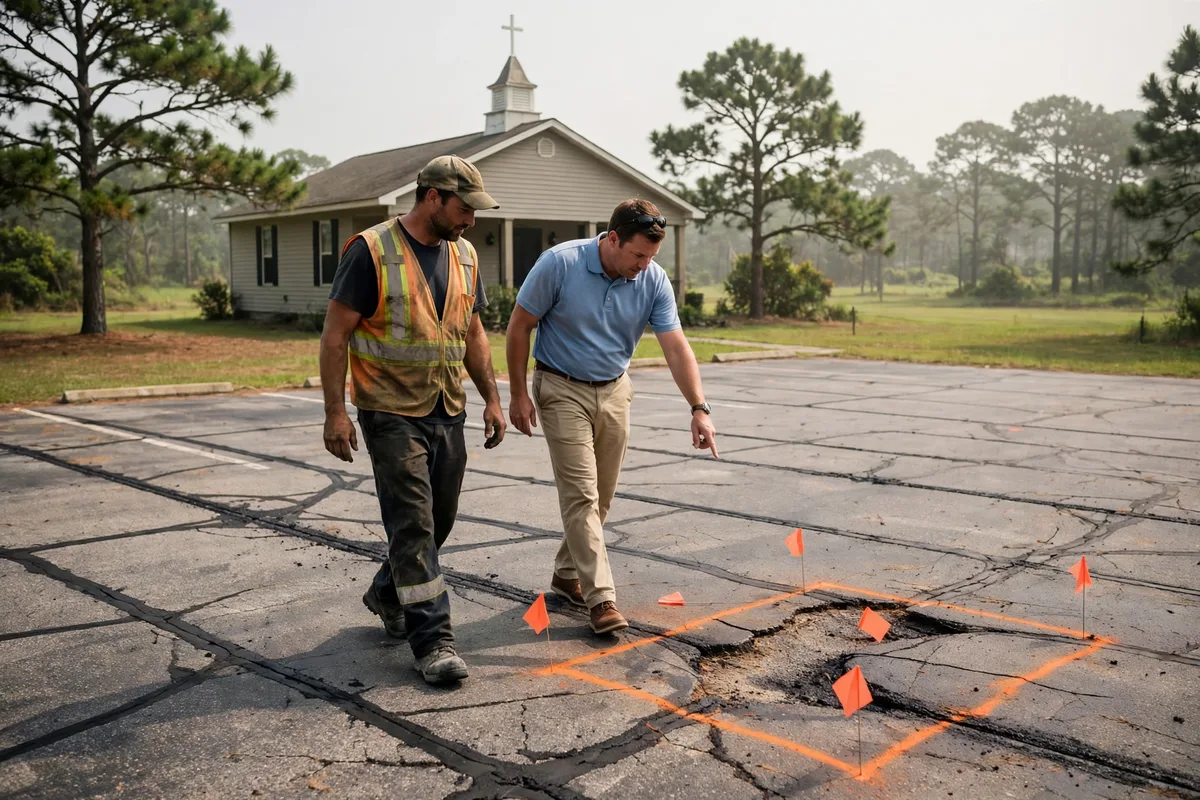
1. Walk and map. Before any equipment starts, we walk the whole pavement. Every crack gets looked at, measured against the quarter inch to one inch range, and marked. On a lot, the cracks go on a sketch of the pavement so the total length is known and the owner can see the count.
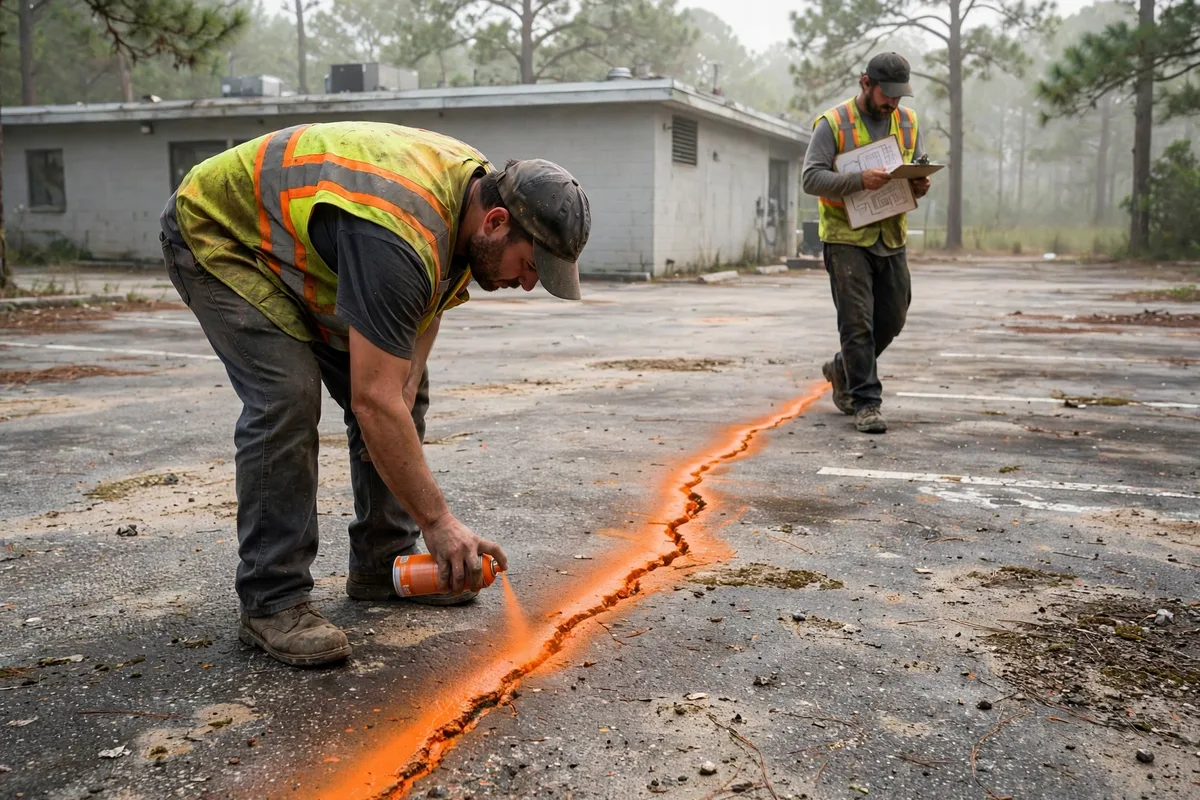
2. Sort. Each marked crack goes into one of four groups: hairline to watch, working crack to seal, wide or sunken to repair first, and alligator areas for patching. Routing or not routing is decided here, on the spot, for each working crack.
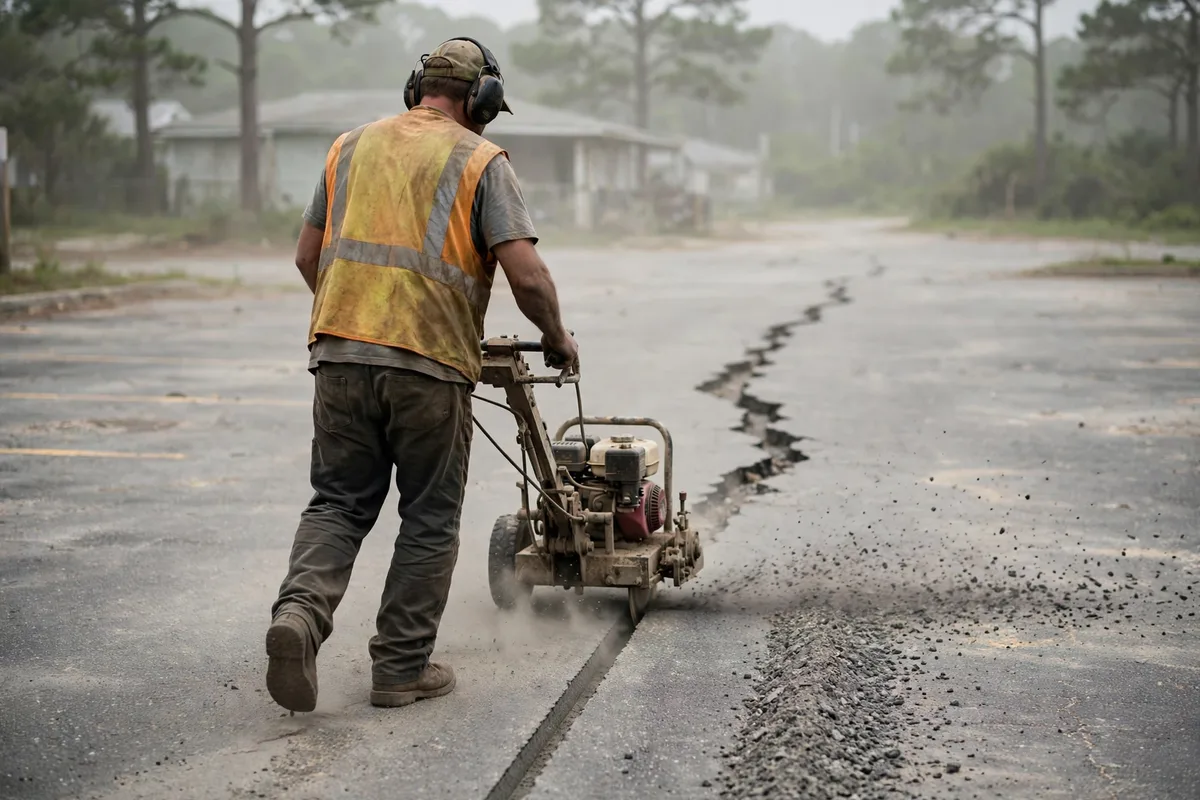
3. Route where it is needed. On cracks marked for routing, a router cuts a clean channel along the crack, squaring the edges and opening a reservoir for the sealant.
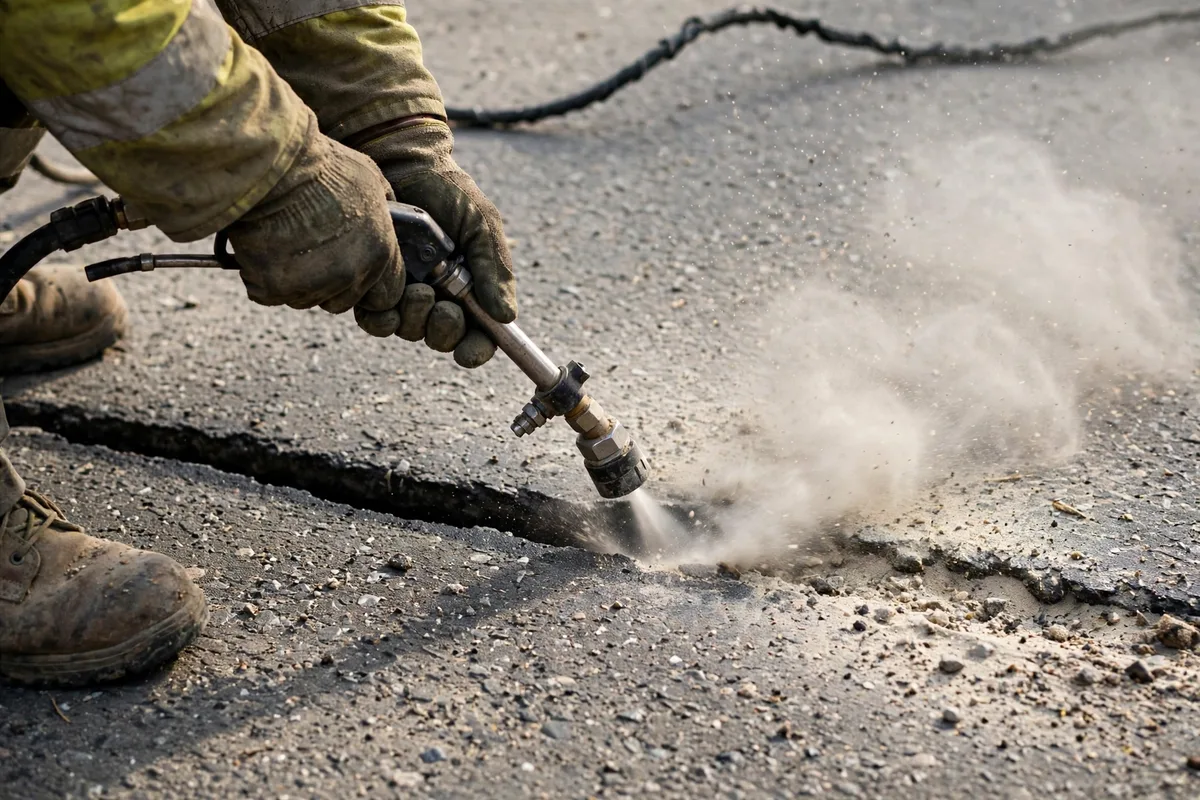
4. Clean and dry. Every crack, routed or not, gets cleaned of dirt, sand, loose asphalt and vegetation, then blown out with compressed air. Sealant will not bond to dust or to a wet surface.
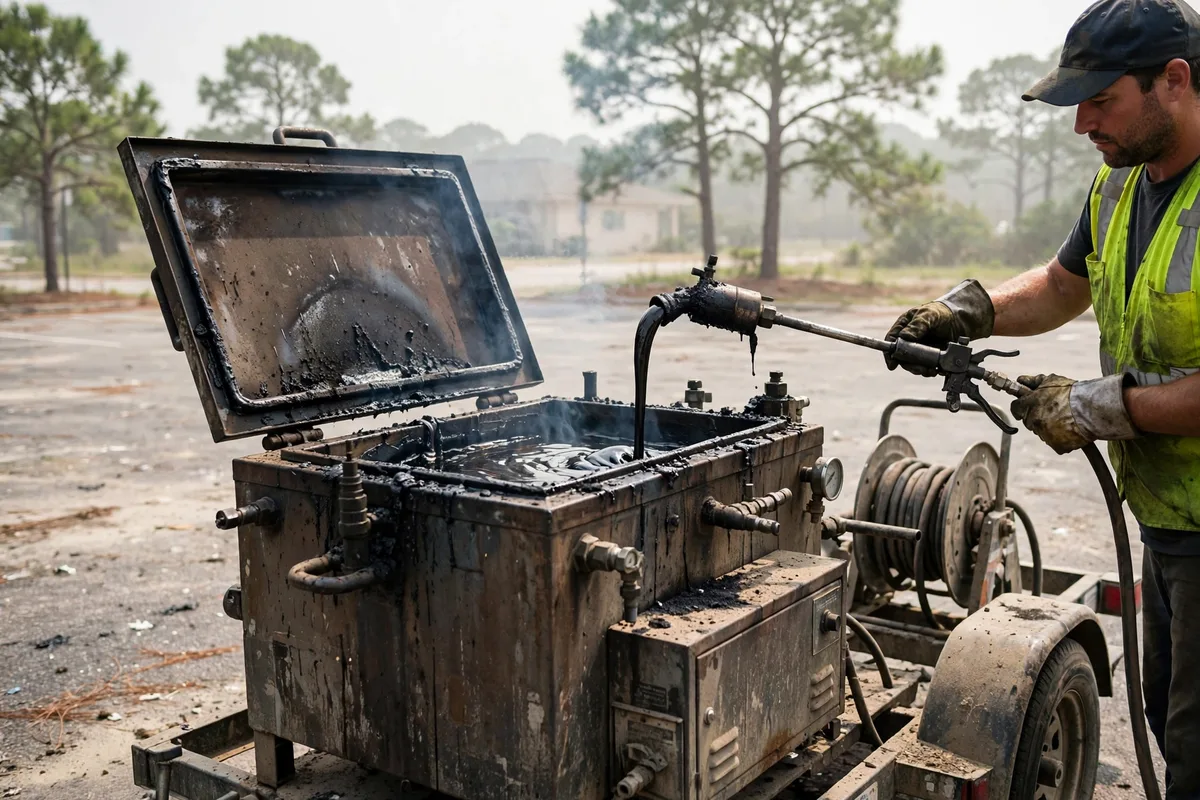
5. Heat and pour. The rubberized sealant is melted in a kettle to working temperature and poured into the crack through a wand, filling from the bottom up.
6. Strike off. Excess sealant is smoothed with a squeegee so the bead is flat and tight to the edges, not piled up where tires will pick it up.
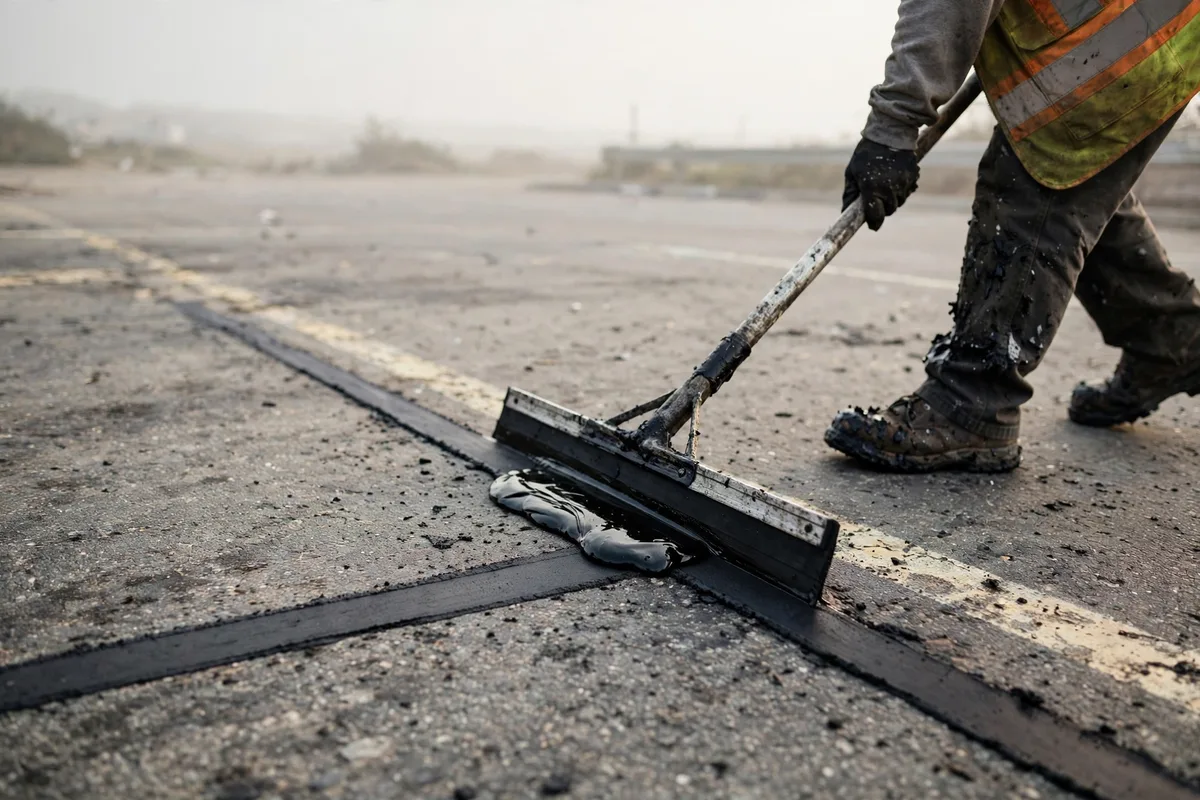
7. Walk it back. Before the crew leaves, we walk every sealed crack again, checking for gaps, low spots and misses, then keep traffic off until the sealant has cooled and set. The owner gets the list of areas that were flagged for patching, so nothing found on the walk is lost.
What it costs
Our crack sealing runs $0.50 to $3.00 per linear foot. Where a job lands in that range depends on three things.
- Length. More feet cost more in total, but long runs are more efficient per foot than a few scattered cracks.
- Routing. A routed crack costs more per foot than one that is cleaned and sealed. Cracks with clean, straight edges stay at the lower end of the range.
- Cleaning. A crack packed with dirt, sand and roots takes more work to prepare, and the price goes up with it.
On a lot, a several-hundred-foot job commonly totals $1,000 to $8,000. A job at the low end is mostly narrow, clean cracks that do not need routing. A job at the high end carries more routing, heavier cleaning, or both. The sketch from the walk gives the footage, and the footage and the sort give the number.
Crack work also costs less than what it prevents. Sealing a crack now is a per-foot charge. Letting the same crack open into a pothole turns it into cutting out, rebasing and patching, and that is a bigger repair than the crack ever was.
A church lot on Village Road
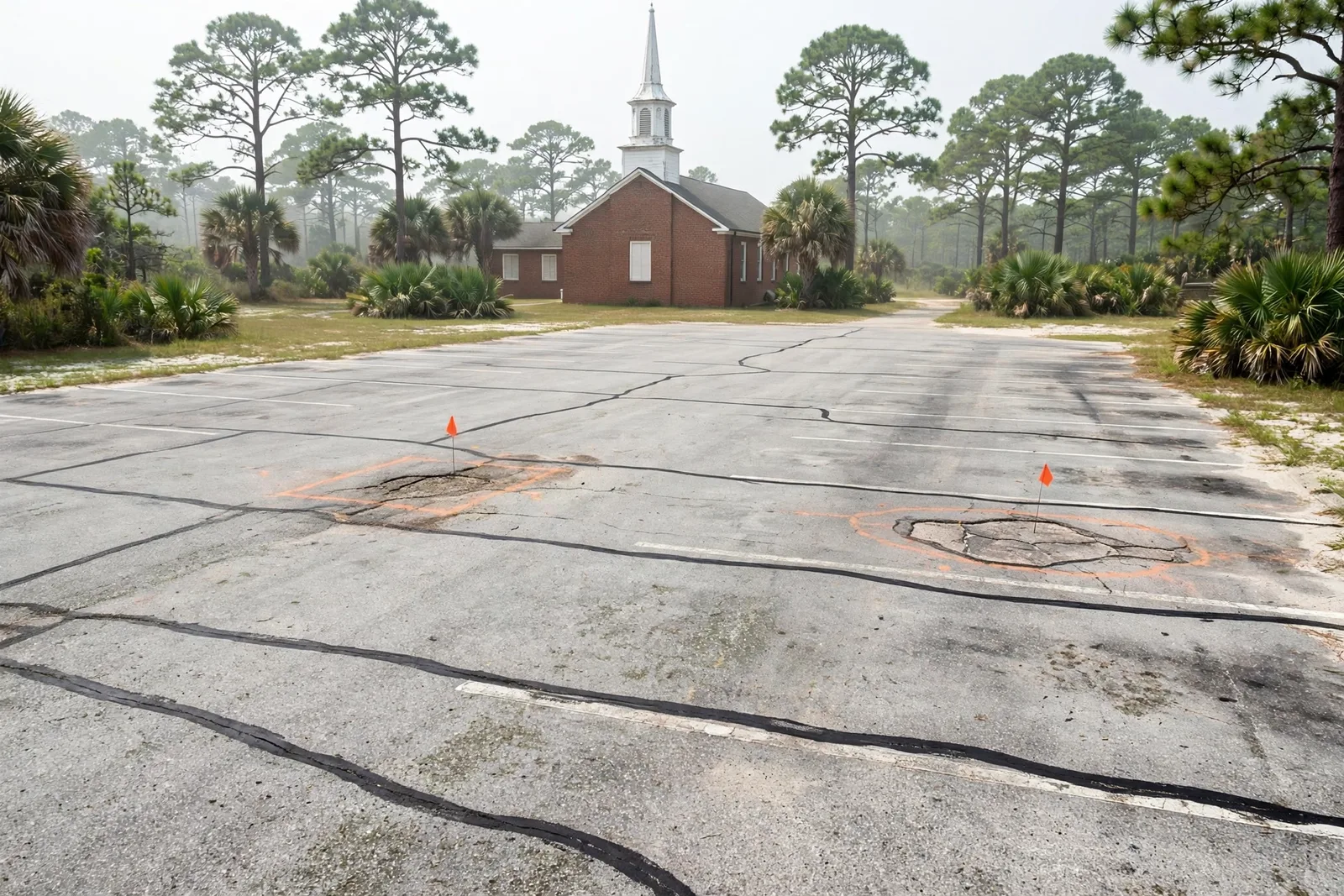
The church lot on Village Road had a sealcoat planned. The congregation wanted the lot to look right and wanted the asphalt protected from sun and oil. But the lot also had cracks running across it, several hundred feet in total, and rain was getting through them into the sand under the pavement. A sealcoat over open cracks would have looked fine for a short while and then the cracks would have shown through.
The crew started with the walk. Every crack was measured and marked in paint, and the lot was sketched with the cracks on it. The crew sorted them. Hairlines were left to watch. Working cracks in the quarter inch to one inch range went on the seal list. Cracks with ragged, crumbling edges were marked to route, and the rest to clean and seal. The map also separated out the spots that were not crack work at all. Where the pattern was alligatored, it went on the patching list, not the sealing list.
Then the crack work itself. Marked cracks were routed, cleaned and blown out, and the hot-pour rubberized sealant went in and was struck flat. The crew walked the lot back before leaving, and the church got the sketch with the flagged areas on it.
On cost, crack work on a lot with several hundred feet of cracking sits in the $1,000 to $8,000 band, and this job was priced the same way as any other, by the linear foot with the routing and cleaning added where they were needed. The sealcoat was a separate job the following month, which gave the sealant time to set before the sealer went over it.
What to watch for after a job like this: look along the sealed cracks after the first few heavy rains and check for gaps at the edges. Check the flagged patching areas, because the base under them is still weak. Sealed cracks are maintenance, not a permanent fix, so most owners walk their lot once a year and reseal cracks that have reopened.
Questions
How much does crack sealing cost?
Our crack sealing runs $0.50 to $3.00 per linear foot. Length, whether the crack is routed, and how much cleaning it needs set the price. Straight, clean cracks that need no routing sit at the lower end, and ragged, dirty or moving cracks sit higher.
What does a whole lot cost?
A several-hundred-foot commercial job commonly totals $1,000 to $8,000. The walk gives us the footage and the sort of cracks, and that gives the total. We can give you a number once we have walked the lot.
Is crack sealing the same as crack filling?
People use both words for the same job: getting sealant into a crack to keep water out. We do it with hot-pour rubberized sealant, in cracks that are cleaned, and routed where they need it.
Which cracks do you seal?
Working cracks, roughly a quarter inch to an inch wide. They open and close with the weather and pass water to the base. Hairline cracks thinner than that we watch, and cracks wider than an inch or with sunken edges get repaired first.
Do you route every crack?
No. Routing cuts a reservoir for the sealant and is the right call for ragged edges or cracks that move a lot. Straight cracks with sound edges are cleaned and sealed without routing. We decide on the walk, crack by crack.
Why hot-pour and not the cold filler from the hardware store?
Hot-pour rubberized sealant bonds to the crack walls and stays flexible as the pavement moves. Cold-pour and DIY filler shrink and pull away from the edges, often in the first season, and the crack ends up open again.
Can I seal my own driveway cracks?
You can, and for a small, still crack a tube of filler will hold for a while. In a working crack it usually lets go. If the crack is wider than a quarter inch or keeps moving, a cleaned and hot-poured seal will do better.
Can you seal alligator cracking?
No, and we will not take money to try. Alligator cracking is base failure showing through the surface. The fix is patching: cut out the failed area, rebuild the base and lay hot-mix.
Should cracks be sealed before sealcoating?
Yes. Sealer goes on over a closed surface, so the cracks are sealed first, ahead of the sealcoat. If the sealer goes over open cracks, they show through and keep letting water in.
Do you fix potholes too?
Yes. Pothole repair and patching is its own service, and we flag patching areas during the crack walk so nothing found there is lost. A pothole is usually a crack that was left open.
How long before I can drive on it?
Not until the sealant has cooled and set. We keep traffic off the sealed cracks and tell you when the drive or lot is open again, before we leave the job.
How long does sealed crack work last?
We do not promise a number of years. Sealant is a maintenance item, and heat, traffic and a moving base all affect it. Most owners walk the pavement once a year and reseal cracks that have reopened.
Do you work on houses or only lots?
Both. Driveways, church lots, HOA and amenity lots, and retail and office lots all get the same walk, sort and sealing. The same per-foot pricing applies.
Do you serve Wilmington and Bald Head Island?
We work from Leland across Brunswick County and go across the river to Wilmington. Bald Head Island is not part of our routine service.
Do you pave new lots or overlay existing ones?
No. We maintain and repair asphalt: sealcoating, crack sealing, patching, striping and maintenance programs. We do not lay new lots or roads.
How do I get started?
Call (910) 370-1121 or fill in the form below. Tell us whether it is a driveway or a lot and what the cracks look like, and we will set up the walk.
Get the cracks sealed
Call (910) 370-1121 or send the form, and we will set up a walk of the pavement. We map the cracks, tell you which ones are sealing work and which are something else, and give you the price by the foot.
The more details you give, the better we are able to help you.