Leland Pavement Care handles commercial parking lot maintenance as a single program rather than a string of unrelated jobs. A crew walks your lot in Leland on a set cycle, writes down what it finds, and the work that follows comes from that walk. The program puts parking lot sealcoating on at the maintenance interval, and crack sealing is done before the heavy rains arrive.
Soft spots get pothole repair and asphalt patching while they are still small and cheap to fix. When they fade, line striping and pavement markings are redone, and wheel stops and signs are checked and reset on the same visits. You deal with one company, you have one record of the lot's condition, and the work is scheduled around your property's calendar.
The program is built for retail centers, offices, medical buildings, churches, HOAs and amenity lots. If you have a lot that gets looked at only when something goes wrong, this is the other way to run it.
Is this the right service for your lot?
It is if you own or manage asphalt that customers, members, residents or patients drive and park on, and you want it kept up instead of repaired in a panic. A shopping center on the US-17 and Village Road corridor, a clinic lot, a church with a big Sunday crowd and a neighborhood clubhouse all fit.
It is not new construction. We do not lay new lots or roads, mill, pour concrete or do drainage work, and we do not bid public road work. Our job is the surface you already have, and keeping it in service as long as good maintenance reasonably can.
Leland is our home ground, and most of the program's lots are within a short drive of it. We also work across Brunswick County and across the river in Wilmington. Bald Head Island is not on our route.
What the program covers
Asphalt is a maintained surface, not a permanent one. On this coast it wears down four ways: UV oxidation, water getting in through cracks, oil and fuel softening the surface, and base failure in sandy soil. The program answers each one on a schedule.
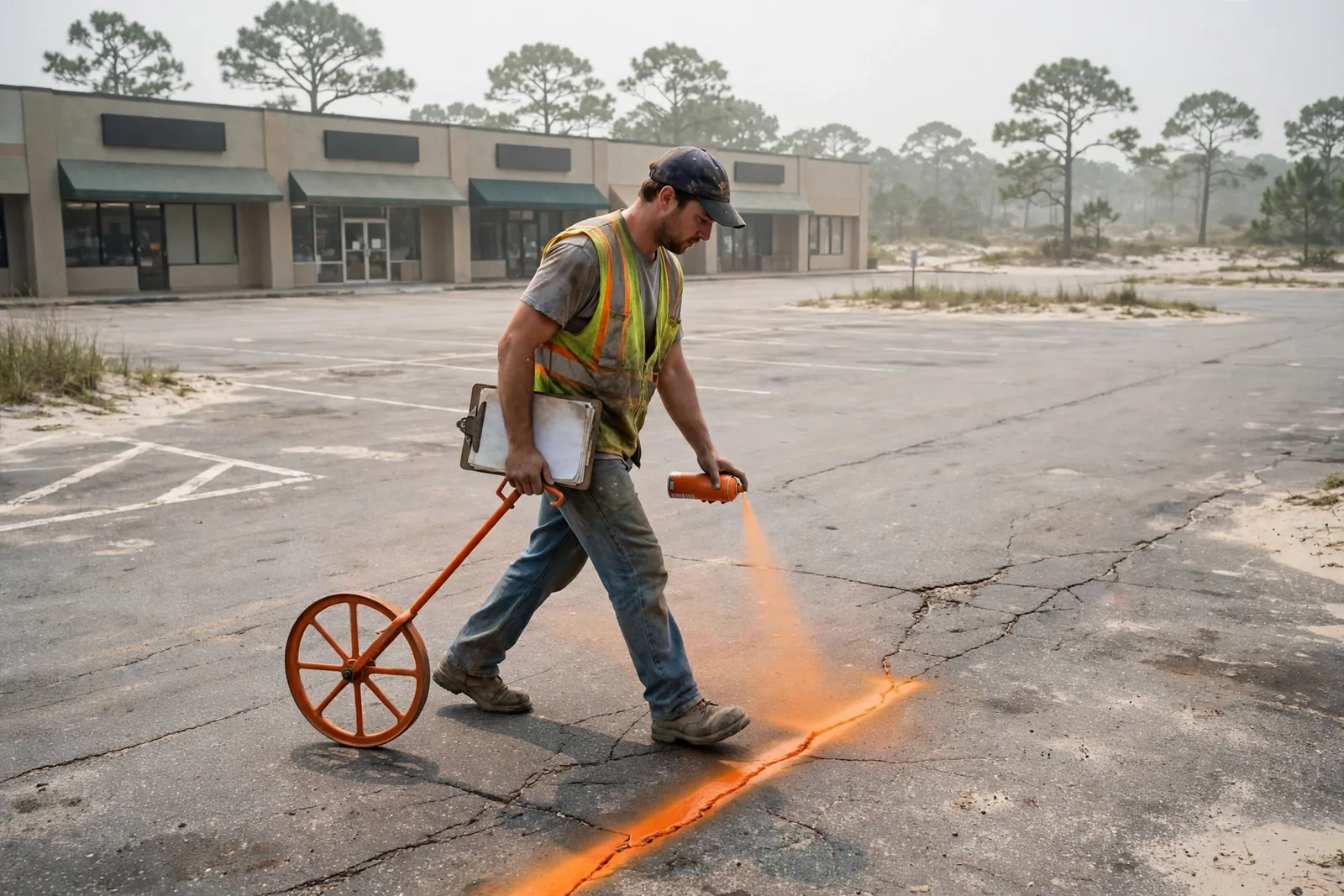
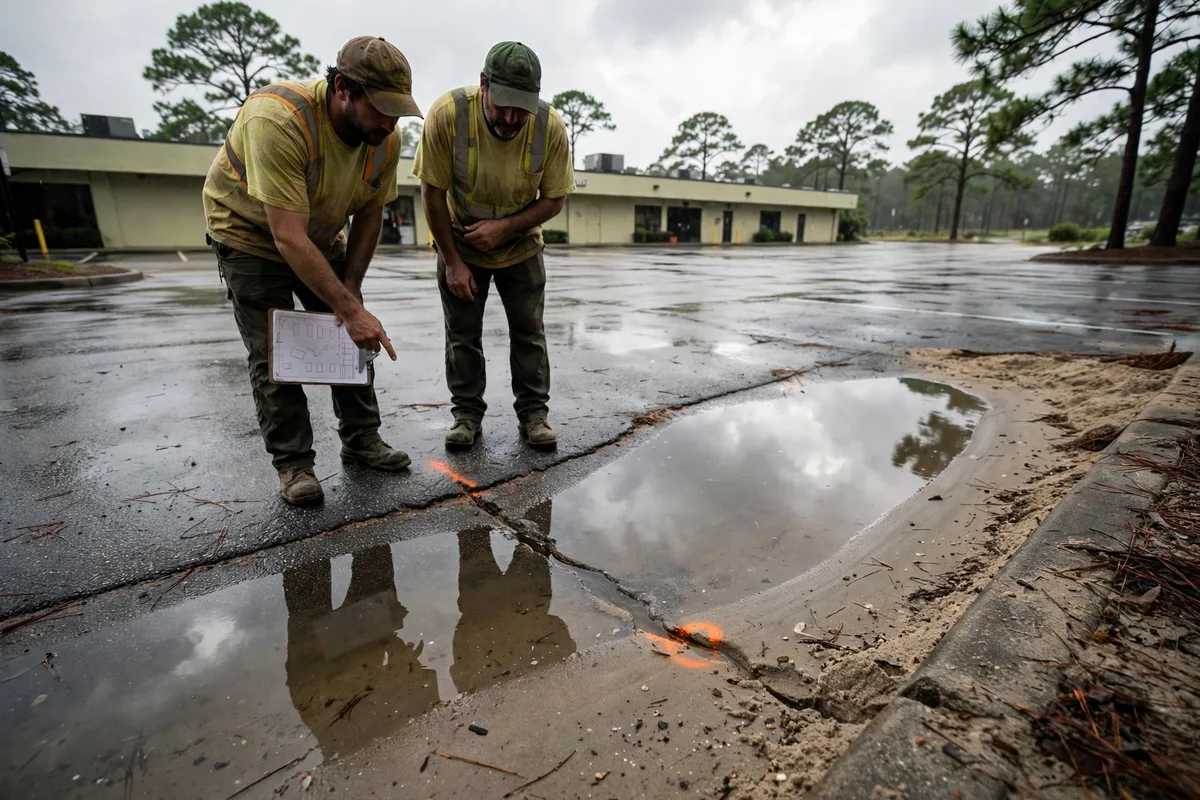
Every cycle starts with a crew on foot. We look at the surface color and texture, every crack, the edges, the spots where water stands after rain, the drive lanes where trucks turn, and the areas around dumpsters and entrances where the wear is worst. What we find goes on the property's record.
Water that gets into a crack goes down to a sandy base, and that is how lots here fail. Our standard is hot-pour rubberized sealant in cracks that have been cleaned or routed. Routing cuts the crack to a reservoir so the sealant has something to hold; non-routing leaves the crack as it is and fits shallower, tighter cracks. We choose by the crack, not by habit. Cold-pour and store-bought filler look fine on the day and let go early, so they are not what we put in a program lot.
Sealcoat protects the surface from UV and from oil and fuel. We apply asphalt-emulsion sealer by spray, squeegee or a combination of the two, and two coats is the commercial norm. Polymer-modified sealer is the premium commercial option when the lot calls for it. Most owners reseal every two to three years. That is typical practice, not a promise about how long any coating or pavement will last, because traffic, shade, sun and storms differ lot to lot.
The durable repair is a saw-cut square, the failed asphalt removed, the base redone and hot-mix compacted in. Skin patches and cold-patch fills are temporary, and we call them that. Catching a soft spot when it is the size of a dinner plate is the whole reason to be on a cycle.
Waterborne traffic paint is the standard. Thermoplastic is the long-wear choice for high-traffic markings such as crosswalks and entrance arrows. Restriping over an existing layout is priced differently from laying out new, and we tell you which one your lot is before the work starts.
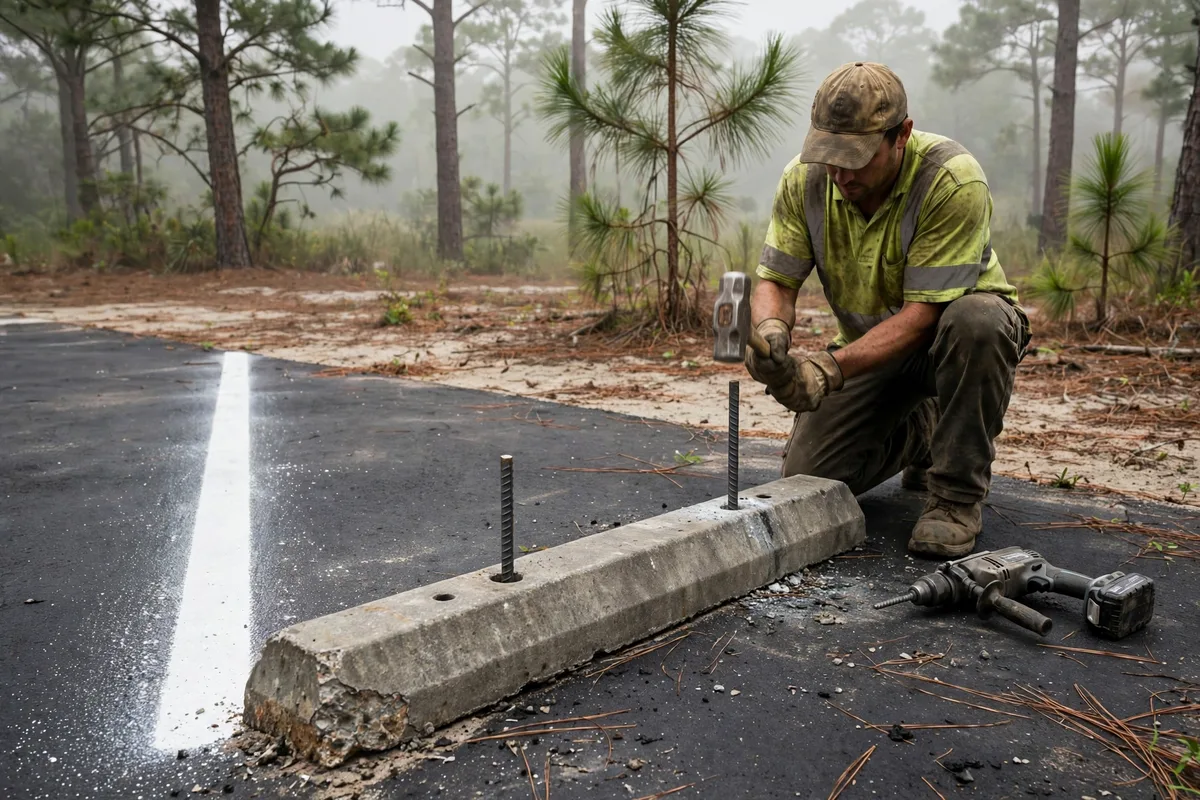
These are an add-on to the lot's work, not a program of their own. A leaning sign or a cracked, shifted stop is checked on the walk and reset or replaced with the rest of the visit.
How the program runs
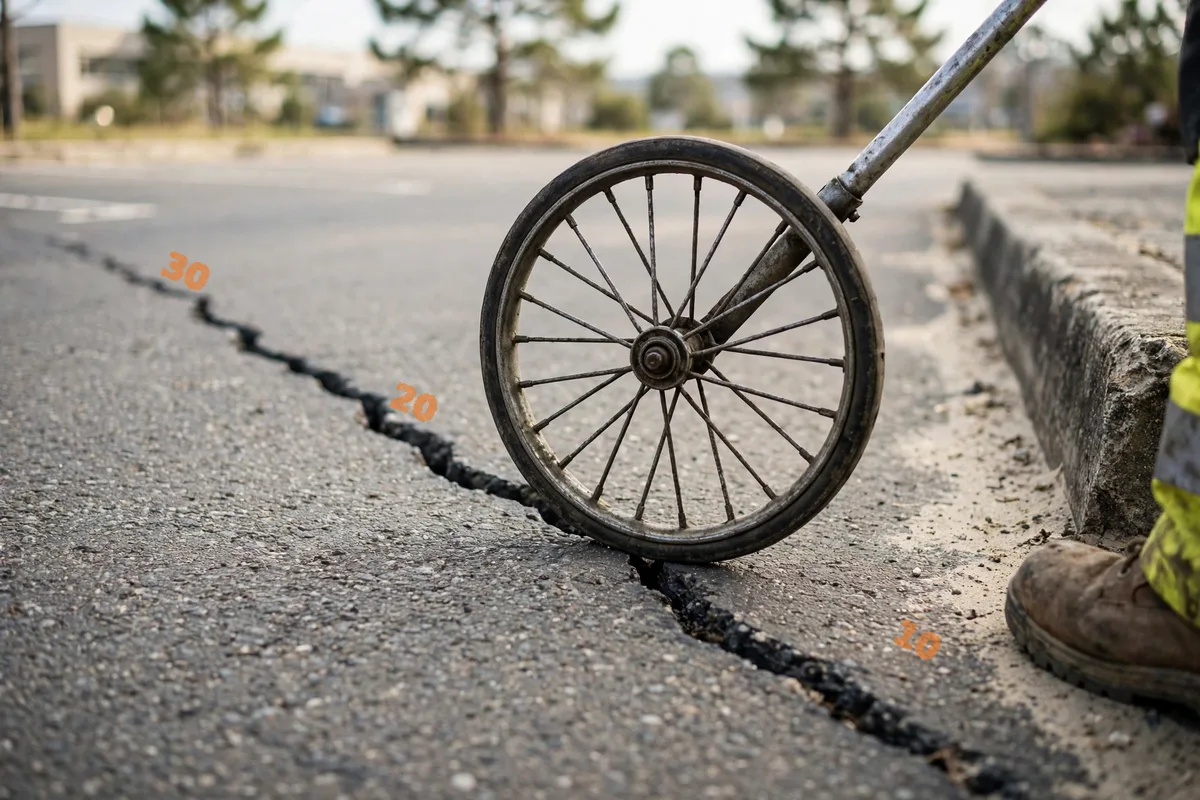
1. Walk the lot The crew walks every drive lane, stall row and entrance, measures cracks, counts soft spots, and notes surface condition, standing water, markings and signs. Notes are taken against the property's actual layout.
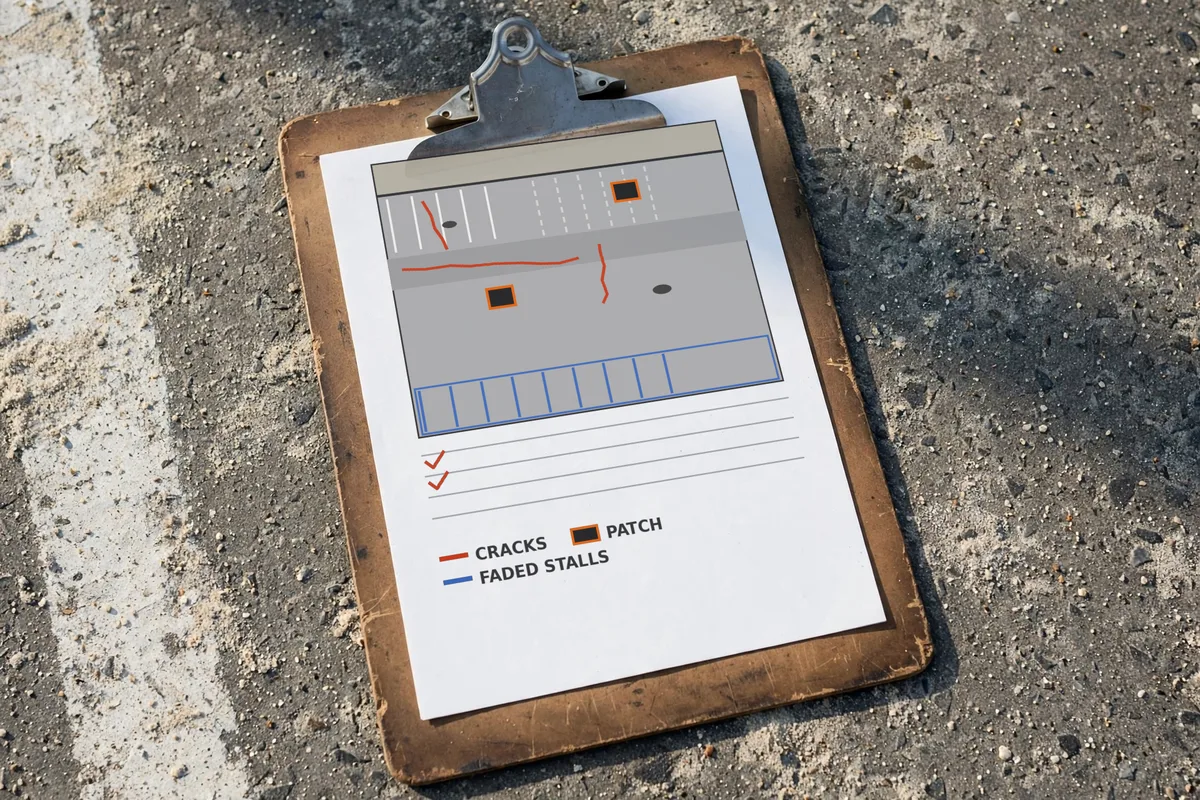
2. Write the condition record and the plan From the walk we write one record of the property and a work plan: what needs doing now, what can wait for the next window, and what we are only watching. The plan is built from the same prices listed below, with prep priced on top where the lot needs it, and it is set against your calendar.
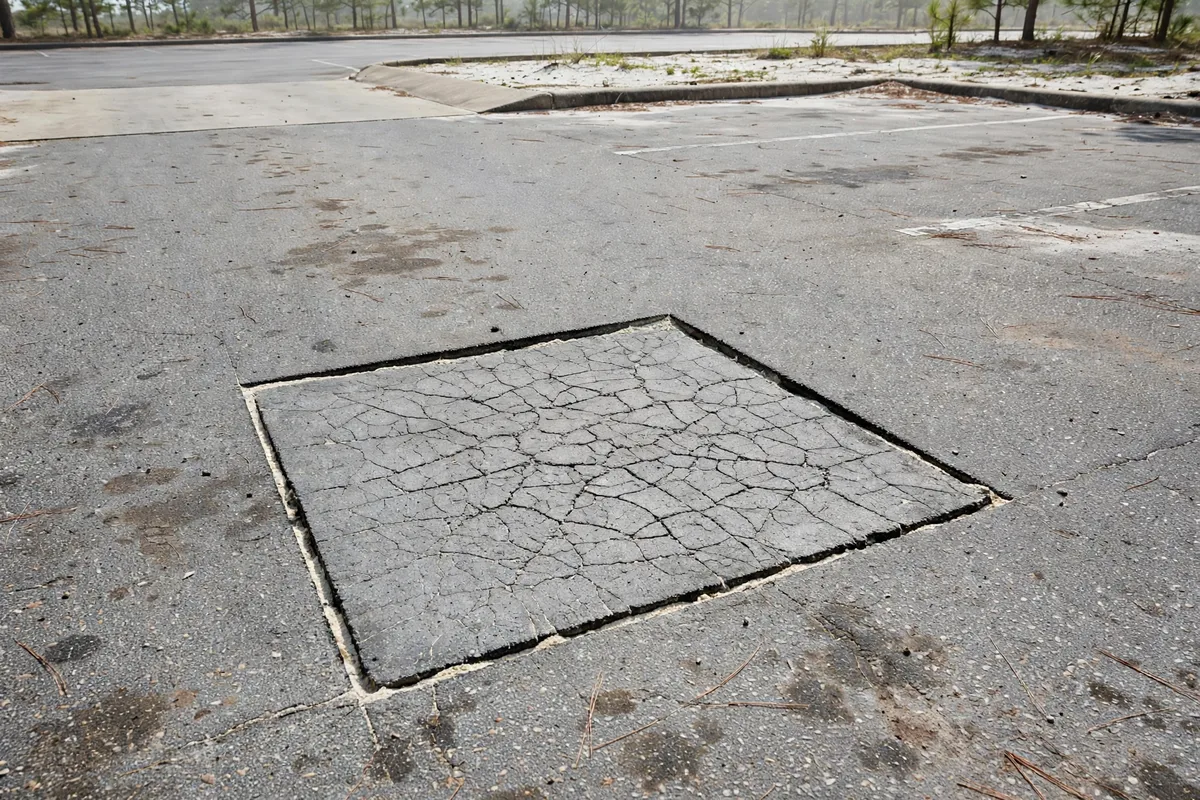
3. Patch the failures first Soft spots and potholes are repaired before anything is coated. The failed asphalt is cut out, the base is redone, and hot-mix is compacted level with the lot. Sealcoat over a failing spot only hides it for a few weeks.
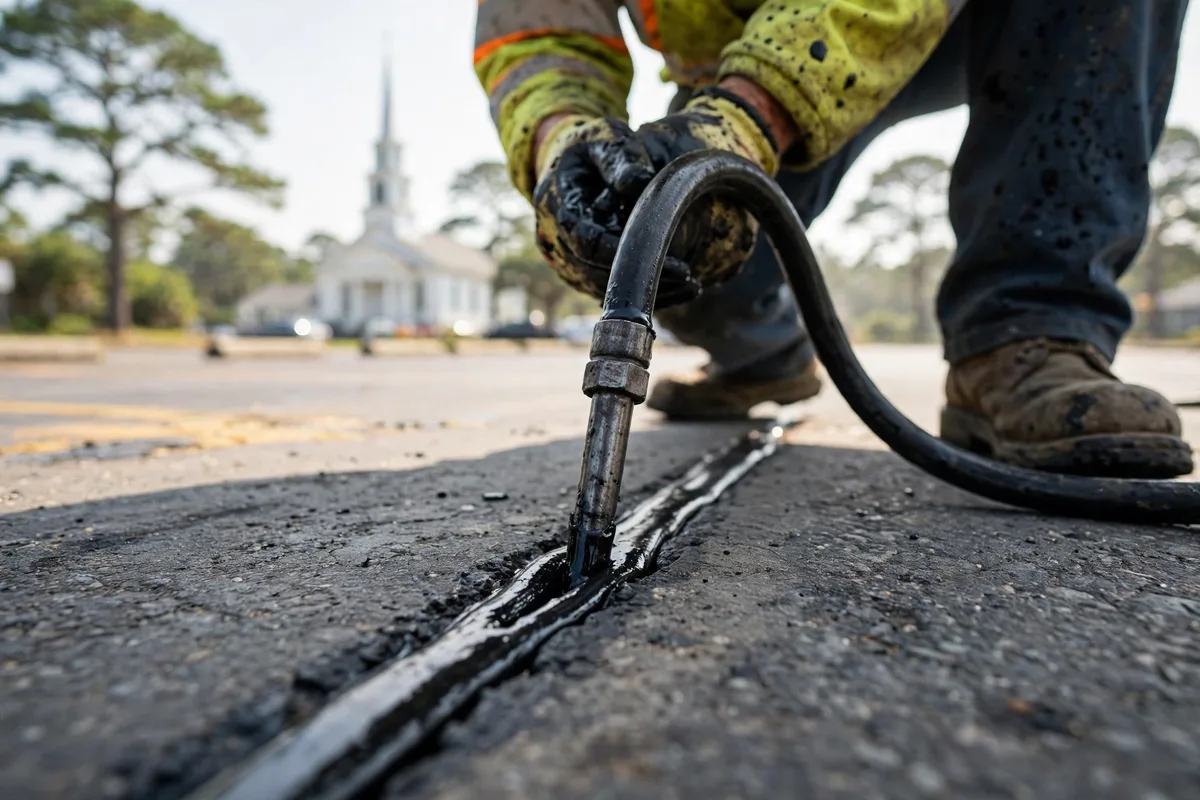
4. Seal the cracks Cracks are cleaned or routed and filled with hot-pour rubberized sealant. This is done ahead of sealcoating so the coating goes on over filled cracks, and ahead of the rain season so water has no way in.
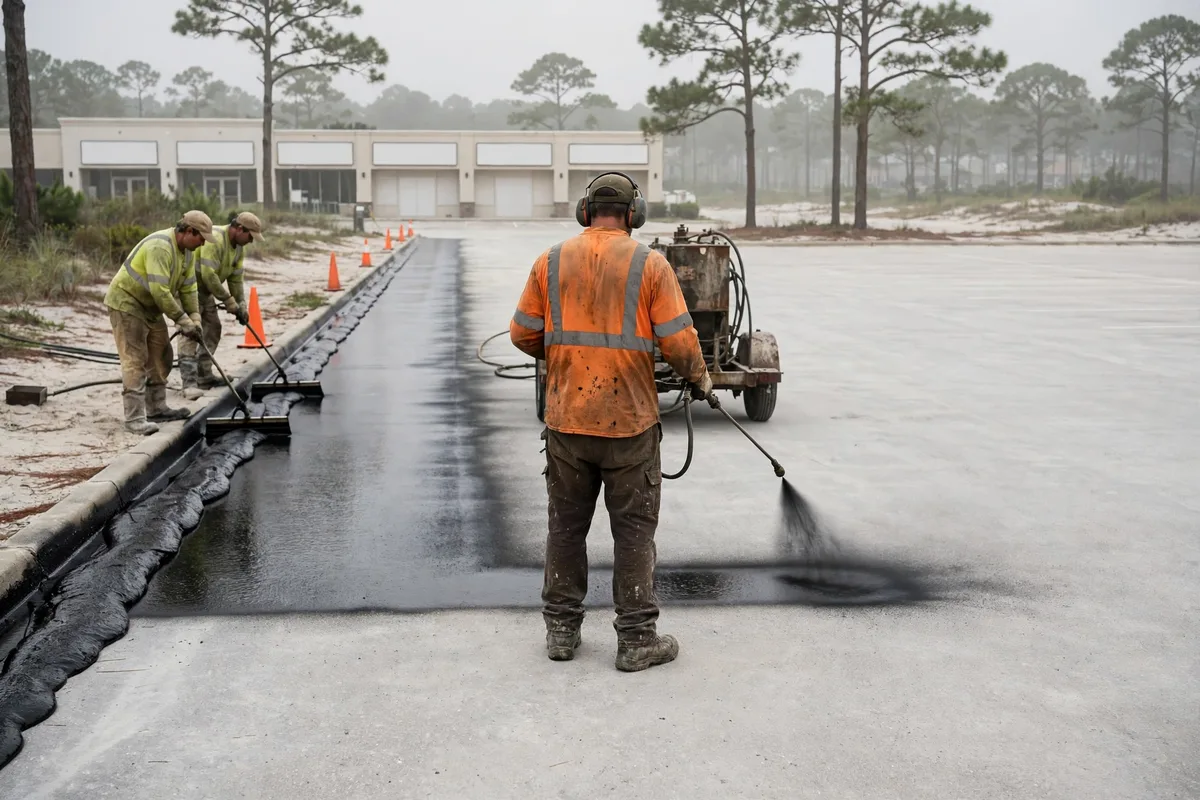
5. Sealcoat on the interval When the surface is due, the lot is cleaned, oil spots are primed so sealer will bond, and two coats are applied. Sections are closed off until the sealer cures, and we plan the closures around your hours and events.
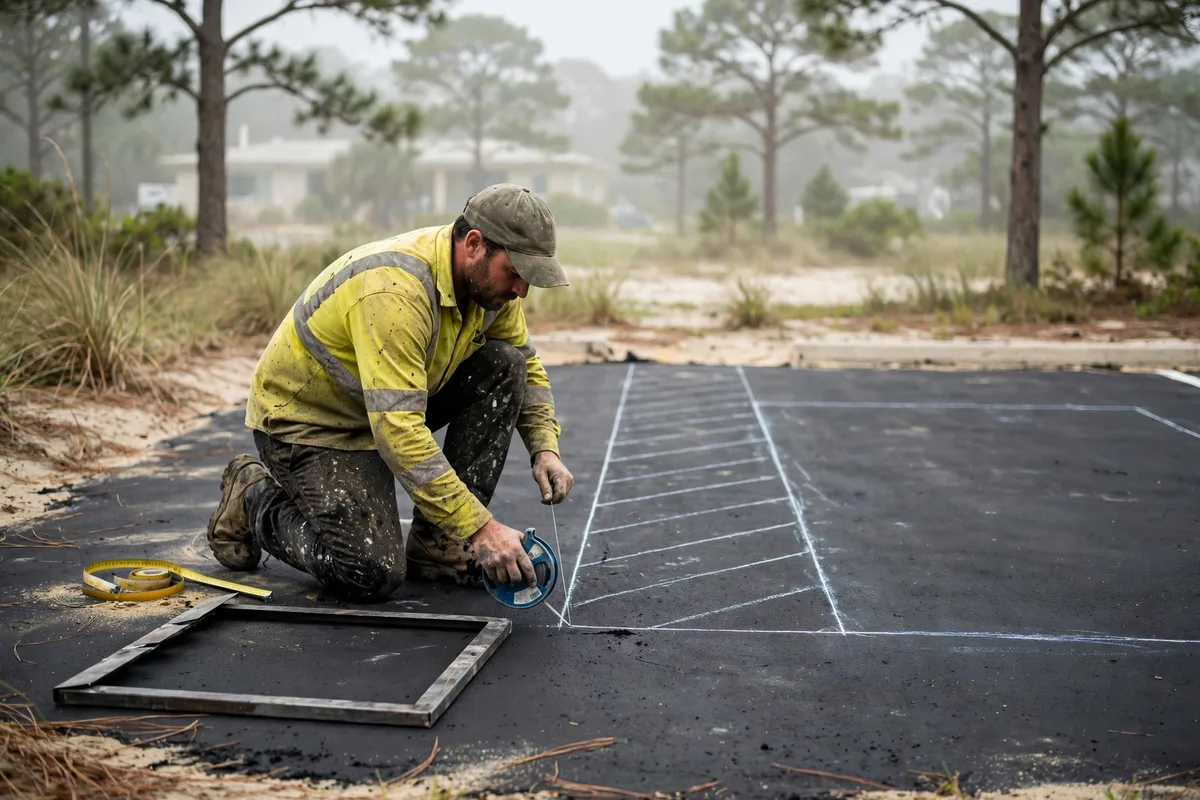
6. Stripe, mark and reset signs and stops Stalls, arrows, crosswalks, fire lanes and accessible spaces are repainted after the sealer cures. Signs that lean and wheel stops that have shifted or cracked are reset or replaced on the same visit.
7. Come back and compare At the next scheduled walk, we compare the lot with its record. A storm check follows heavy weather. Whatever changed goes on the record, and the next window's work is adjusted.
The year on your lot
Maintenance calendar
The crew walks the lot and updates the condition record. Cracks are measured, cleaned or routed, and filled with hot-pour rubberized sealant so they are closed before the summer storms. Soft spots are marked for patching.
The lots that are due get sealcoated, typically on a two to three year maintenance interval, which is typical practice and not a guarantee. Patching comes first, then crack work, then oil-spot priming and two coats of sealer. Closures are scheduled around the property's calendar.
Stalls, arrows, crosswalks, fire lanes and accessible markings are repainted once sealer has cured. Signs and wheel stops are checked and reset. After any storm the crew checks for standing water, new cracks and shifted stops.
Cold weather loosens weak spots, so the crew watches for new potholes and failed patches and repairs them while they are small. The record is reviewed and the next year's plan is set with the owner.

What it costs
The program is priced per property from the walked inspection. It is built from the same prices as the individual services it schedules, so you can see what each piece costs and what is driving it.
| Work | Our price | What moves it |
|---|---|---|
| Commercial sealcoating | $0.20 to $0.40 per square foot | Lot size (large lots price toward the lower end), surface condition, and prep priced on top |
| Crack sealing | $0.50 to $3.00 per linear foot | Crack width and depth, routed or not, how much cleaning is needed |
| Pothole repair | $150 to $400 per pothole | Size, depth and the condition of the base underneath |
| Striping jobs | $600 to $3,600 | Number of stalls and markings, restripe over existing or new layout, paint type |
Prep work for sealcoating, such as crack sealing, cleaning and oil-spot priming, is priced on top of the per-square-foot figure. Larger patches are cut and repaired by the square foot, with size, depth and base condition setting the price. Signs and wheel stops are added to the property's plan item by item from the walk.
The walk turns these figures into a number for your lot. You see which line items come from the first year's catch-up and which belong to the standing cycle.
When maintenance is no longer the right spend
Some lots are past maintenance. The surface is cracked all the way across in a pattern like alligator skin, soft spots keep reappearing in the same places, and the base underneath has gone. Spending more to coat and patch that kind of pavement is spending money on a surface that will not hold it.
At that point the owner is facing a repair-versus-replace judgment, and the walk is what informs it. Resurfacing context runs about $4 to $8 per square foot, which is the number to set against what you would keep spending on repairs year after year. If maintenance is the right call, we say so and give the figures above. If it is not, we tell you that too, plainly.
Resurfacing is a different kind of job from the work in this program. We keep lots maintained. We do not lay new surfaces, and we are not the right company to hire for one.
An HOA amenity-center lot off Village Road
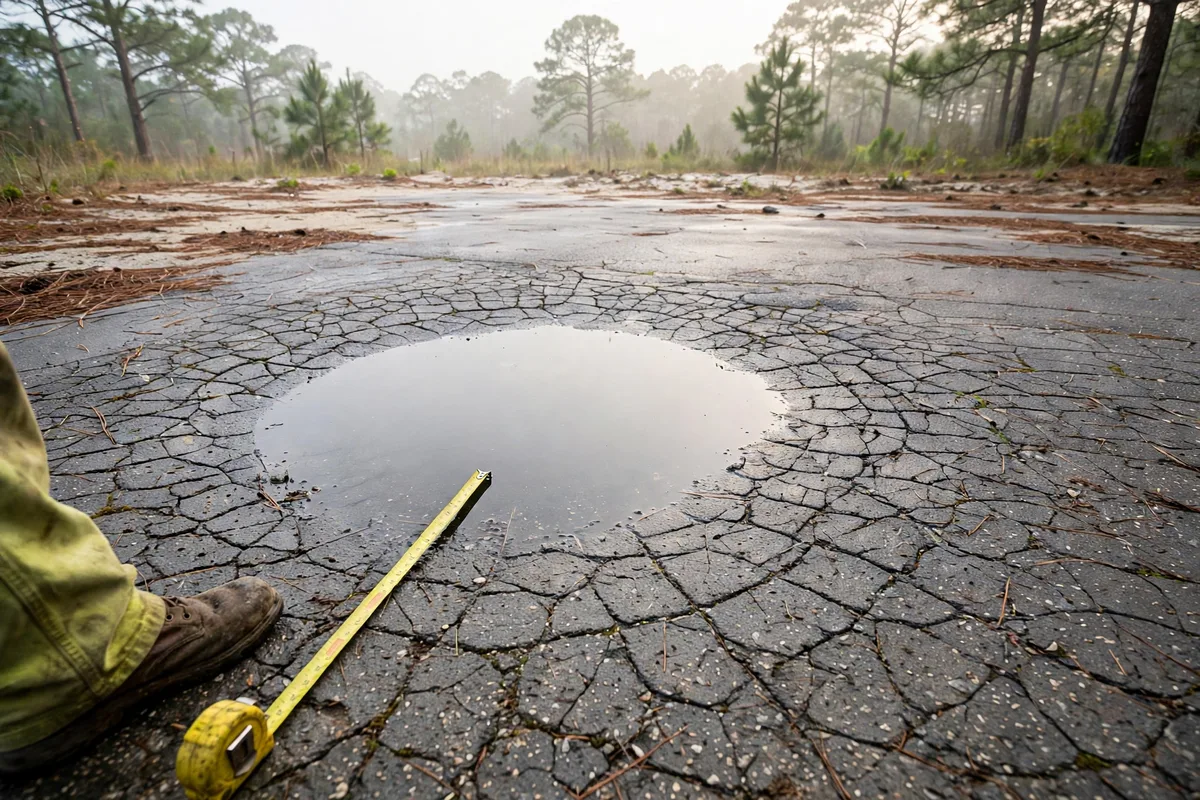
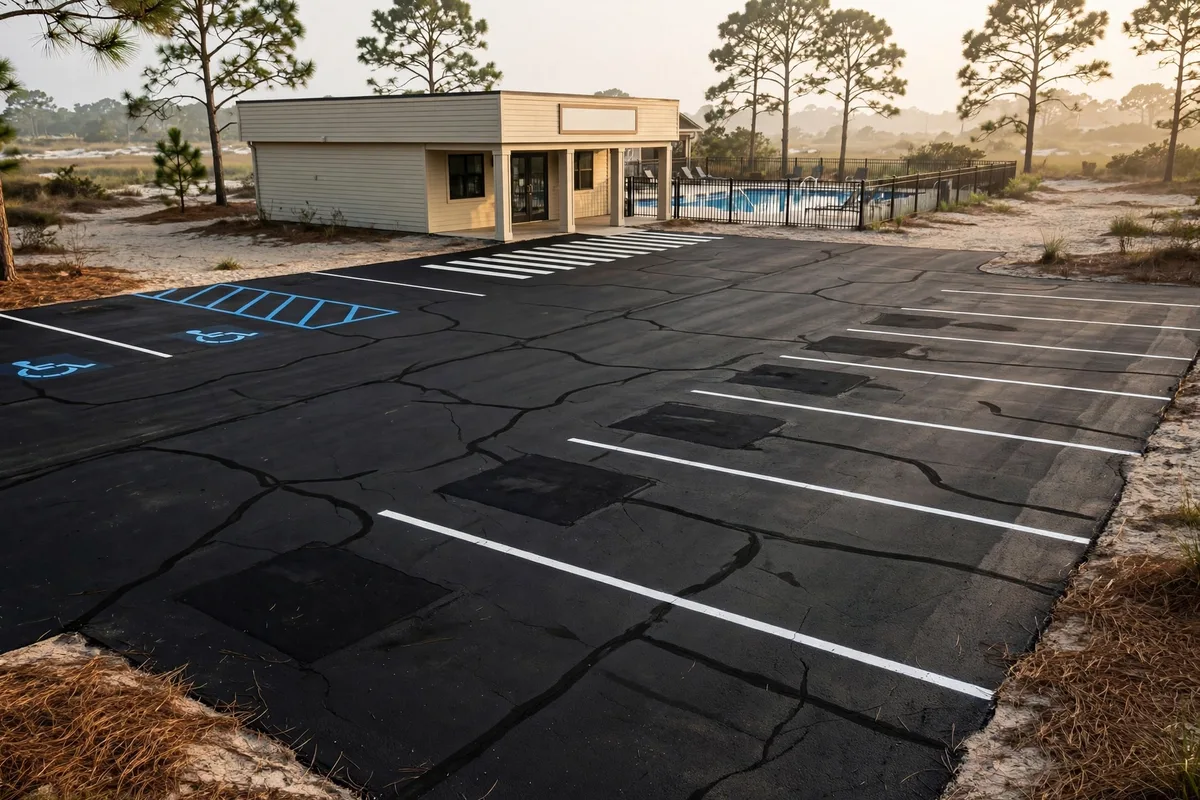
An HOA board in Leland called us about the lot at their clubhouse and pool. It had not been touched in a long time, and the board was getting complaints. Members could see faded stalls, a dull gray surface, and open cracks across the main aisle. Near the pool entrance, a few spots had gone soft and dipped.
We walked it on foot and wrote everything down. Cracks ran across the aisle and around the edge where the pavement meets the curb. The soft spots were at the pool entrance and near the dumpster pad, where trucks turn and heavy loads sit. The oil staining was heaviest in the stalls closest to the door. The stalls, arrows and fire lane were fading, and the accessible spaces and their aisle needed repainting.
The order of the work mattered. We did the patching first. Each failed spot was saw-cut square, the old asphalt removed, the base redone, and hot-mix compacted in. At $150 to $400 per pothole, with size, depth and base condition deciding where each one landed, that was the first line of the plan. Next, cracks were cleaned and filled with hot-pour rubberized sealant at $0.50 to $3.00 per linear foot, based on width and how much cleaning each one needed.
Then came the sealcoat. We cleaned the lot, primed the oil spots so the sealer would bond, and put on two coats in sections so members could still reach the clubhouse. Because the lot was large, it priced toward the lower end of the commercial band of $0.20 to $0.40 per square foot, with the prep on top. Last was striping once the sealer cured: stalls, arrows, crosswalk and fire lane were restriped over the existing layout, and the accessible spaces and aisle were repainted. That job fell inside the $600 to $3,600 striping range.
Then we set the standing cycle with the board. A walk each spring, with crack work. A summer sealcoat window, used only when the lot is due, typically every two to three years. A fall restripe and storm check, and a winter watch for new soft spots. The board also wanted the lot clear during the summer pool season, so closures were scheduled around the pool calendar.
What to watch for on a lot like this: standing water after a storm, which shows where a crack is open or the surface has settled; cracks reopening at the curb edge; and new soft spots where trucks turn. Those get logged and fixed on the next visit, not left to grow.
Questions
What does the maintenance program include?
It includes a walked inspection on a cycle, crack sealing, sealcoating at the maintenance interval, patching, striping and pavement markings, and a check on signs and wheel stops. It also includes one written record of your lot's condition and a schedule set around your property's calendar.
How much does the program cost?
It is priced per property from the walked inspection. It is built from our service prices: commercial sealcoating at $0.20 to $0.40 per square foot, crack sealing at $0.50 to $3.00 per linear foot, pothole repair at $150 to $400 per pothole, and striping jobs at $600 to $3,600. Lot size, condition and prep decide where your lot falls.
How often does a commercial lot need sealcoating?
Most owners reseal every two to three years. That is typical practice, not a guarantee, since sun, shade, traffic and storms change how fast a surface wears. The walk tells us whether your lot is due.
What does crack sealing cost?
Crack sealing runs $0.50 to $3.00 per linear foot. Width, depth, whether the crack is routed and how much cleaning it needs move the price. We measure the cracks on the walk so the foot count is real.
What does pothole repair cost?
Pothole repair is $150 to $400 per pothole. Size, depth and the condition of the base under it set the price. Larger failures are cut and patched by the square foot on area.
What does it cost to restripe a lot?
Striping jobs run $600 to $3,600. The number of stalls and markings, whether the job is a restripe over the existing layout or a new layout, and the paint type all affect it. Waterborne paint is standard, and thermoplastic is the long-wear option for high-traffic markings.
What sealer do you use?
We use asphalt-emulsion sealer, applied by spray, squeegee or both, and two coats is the commercial norm. Polymer-modified sealer is the premium commercial option. We choose based on the lot and how it is used.
Do I have to close my lot?
Parts of it, for a time. Patching and crack work close small areas briefly, and sealcoating and striping close sections until the product cures. We plan the sections around your hours, events and busy periods so the property keeps working.
Why is the order of work patches, then cracks, then sealcoat, then stripes?
Each step depends on the one before it. Sealer over a failing spot or open crack only hides the problem, and paint goes down only after the sealer has cured. Doing it in order is what makes the work hold.
Do you work with HOAs and churches?
Yes. HOA amenity lots, clubhouses, churches, retail centers, offices and medical lots are all part of this program. For churches and amenity lots especially, the work is timed around services, events and pool season.
What about accessible spaces and fire lanes?
We repaint accessible spaces, access aisles, crosswalks, fire lanes and directional markings as part of the striping work. That is markings work. We do not certify legal compliance or guarantee code conformance.
Do you handle signs and wheel stops?
Yes, as an add-on to the lot's work. We check them on the walk and reset or replace leaning signs and shifted or cracked stops on the same visit as the rest of the work.
What if my lot is too far gone for maintenance?
We will tell you so after the walk. Resurfacing context runs about $4 to $8 per square foot, and that is the number to weigh against continuing to repair. It is a repair-versus-replace decision for you to make with the facts. We maintain lots and do not lay new surfaces.
Do you do drainage work for standing water?
No. Drainage is not our work. What we do is seal the cracks that let water into the base and patch the spots where the base has failed, which is often what standing water is pointing to.
Do you serve Wilmington and the beaches?
Leland is our center. We also serve Wilmington across the river and road-connected parts of Brunswick County. Bald Head Island is not on our route.
Start with a walk of your lot
Call us at (910) 370-1121 or fill in the form below. Tell us what kind of property it is and what you are seeing on the pavement, and we will set up a walk. Then we write up what the lot needs and what it will cost.
The more details you give, the better we are able to help you.